

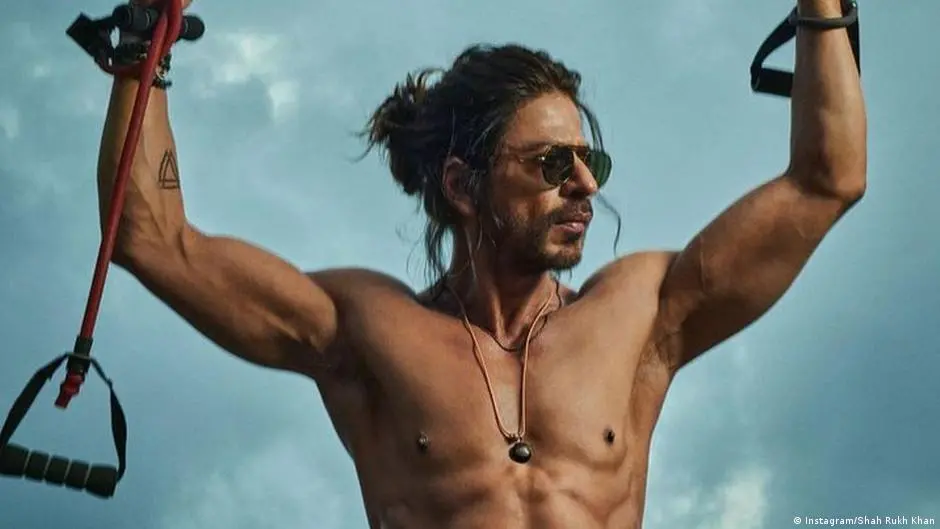
Shah Rukh Khan, often referred to by his initials SRK, is not just a Bollywood actor; he is a global phenomenon. Born on November 2, 1965, in New Delhi, India, Khan's journey from a aspiring sportsman to the undisputed 'King of Romance' is a tale of resilience, charisma, and an unparalleled connection with his audience. Over the past three decades, he has starred in more than 80 films, building a fanbase that stretches across continents, from Tanzania to Canada, from Greece to China, and even Peru and Germany. His appeal lies in his ability to make each viewer feel like they are the sole recipient of his romantic overtures, a feat that few actors can achieve.
Khan's early life was shaped by his academic pursuits; he studied mass communications and later pursued a career in acting after a sports injury dashed his dreams of becoming a cricketer. He moved to Mumbai in 1991 with a one-year deadline to make it in the film industry—a gamble that paid off spectacularly. His first big break came in television with anti-hero roles, as directors initially doubted his leading-man looks. However, his breakthrough in films arrived with the 1993 hit 'Baazigar', where he played a negative role, subverting expectations. But it was the 1995 romantic blockbuster 'Dilwale Dulhania Le Jayenge' (DDLJ) that cemented his legacy. The film, which translates to 'The One with the Big Heart Wins the Bride', became the longest-running film in Indian cinema history, still playing at Mumbai's Maratha Mandir theatre after 27 years. In DDLJ, Khan first struck his iconic pose: arms outstretched, a mischievous smile on his face—a gesture that became a symbol of his romantic persona, later parodied and imitated worldwide, even by celebrities like David Letterman.
What makes Shah Rukh Khan so irresistible? According to Vera Wessel, editor-in-chief of the German-language Bollywood magazine 'Ishq', it's his ability to balance flirtation with sincerity. 'He can flirt outrageously, but when it comes to commitment, he stops joking—and we all fall for him,' she explains. This duality is central to his appeal. Unlike many action heroes, Khan often portrays vulnerable, emotionally open characters—lovers, husbands, even villains—who cry and express their feelings freely. This has resonated deeply with audiences, especially women, who see in him a modern, sensitive ideal. Economist Shrayana Bhattacharya, in her 2021 book 'Desperately Seeking Shah Rukh', argues that Khan's performances offer a sense of intimacy and independence to lonely young women in India, making him a cultural touchstone.
Khan's personal life is as fascinating as his screen persona. He married Gauri Chibber, a Hindu, in 1991, and they have three children. Despite his fame, he remains grounded, often downplaying his sex-symbol status. 'At home in India, I sell dreams and love to millions of people who think I'm the best lover in the world. If you don't tell anyone, I'll admit I'm not—but I've never let that slip,' he joked in a 2017 Vancouver talk. He also famously includes a 'no-kiss clause' in his contracts, citing shyness, though he has relaxed this in recent years with occasional on-screen kisses. His self-deprecating humor and willingness to discuss personal topics—aging, flop films, even his sex life—make him endearingly human. For example, during an interview with Jonathan Ross in 2010, he lightheartedly mentioned his discomfort with kissing, a topic that only added to his mystique.
Beyond romance, Khan has tackled a wide range of roles. He played a terrorist in 'Darr' (1993), a scientist in 'Swades' (2004), a hockey coach in 'Chak De! India' (2007), and a man with Asperger's in 'My Name Is Khan' (2010). Each role showcased his versatility, though his romantic image remains dominant. His production company, Red Chillies Entertainment, has also produced several successful films, and he is known for his philanthropic work, supporting causes like child health and education. Despite a three-year hiatus due to the COVID-19 pandemic, Khan returned in 2023 with three major releases—'Pathaan', 'Jawan', and 'Dunki'—all of which were box-office hits, proving that his magic is far from fading.
Shah Rukh Khan's influence extends beyond films. He has a massive social media presence: over 42 million followers on Twitter and Facebook, and 31 million on Instagram. His fan clubs are organized in countries as diverse as Tanzania, Greece, and Peru. In Germany, his popularity skyrocketed after DDLJ was screened there, leading to a dedicated fanbase. The hashtag ShahRukhKhan with his iconic pose became a Twitter trend in 2022, further cementing his digital era relevance. Yet, despite this immense fame, he remains intensely private about his family, especially his children, whom he protects fiercely from the limelight.
In a career spanning 30 years, Khan has received numerous awards, including 14 Filmfare Awards, and was honored with the Padma Shri, India's fourth-highest civilian award, in 2005. He has also been a regular at global events, from the World Economic Forum to TED talks, where he speaks on topics like humanity, fame, and love. His 2017 TED talk, 'Thoughts on Humanity, Fame, and Love', attracted millions of views. As he continues to evolve, his legacy as the 'King of Romance' seems secure, but his true gift is his ability to make every viewer feel like they are the only one in the room.
Early Life and Struggles
Shah Rukh Khan was born to Meer Taj Mohammed Khan and Lateef Fatima in a middle-class family. His father was a freedom fighter, and his mother was a magistrate. He lost his parents early in his life—his father in 1981 and his mother in 1991, shortly before he entered the film industry. He attended the prestigious St. Columba's School in Delhi, where he excelled in sports, particularly hockey and football. After school, he studied at Hansraj College and later earned a master's degree in mass communications from Jamia Millia Islamia University. His initial foray into acting was through television, with roles in shows like 'Fauji' (1988) and 'Circus' (1989). His film debut was in 1992 with 'Deewana', which was a commercial success. However, his early career was marked by a combination of negative and supporting roles before he found his romantic niche.
The DDLJ Phenomenon
'Dilwale Dulhania Le Jayenge' is arguably the most significant film in Shah Rukh Khan's career. Directed by Aditya Chopra, the film broke box-office records and redefined Hindi cinema's romantic genre. Khan's portrayal of Raj, a rebellious London-based Indian who wins the heart of Simran (Kajol), resonated with the Indian diaspora. The film's iconic scenes—the train station finale, the mustard field sequence—became cultural touchpoints. Its success also made Khan a household name in countries like Germany, where it was one of the first Bollywood films to gain mainstream traction. The film's run at Maratha Mandir continues to this day, with daily screenings since its release in 1995, making it the longest-running film in Indian cinema history.
Global Fanbase and Cultural Impact
Shah Rukh Khan's influence is truly global. In countries like Egypt, Nigeria, and the UK, his films are dubbed or subtitled and enjoy huge popularity. He has been a brand ambassador for many international products and has appeared on shows like 'The Oprah Winfrey Show' and 'Late Show with David Letterman'. His fan clubs often organize events, screenings, and charity drives in his name. In Germany, the magazine 'Ishq' covers Bollywood extensively, with Khan featuring prominently. His ability to connect with people across cultures is attributed to his universal themes of love, family, and identity. For example, his performance in 'My Name Is Khan', which dealt with Islamophobia post-9/11, was applauded internationally. His influence even prompted academic studies, like economist Shrayana Bhattacharya's book, which delved into his impact on Indian women's aspirations.
Personal Life and Humility
Khan's marriage to Gauri Chibber has often been in the spotlight. They met in high school and faced parental opposition due to religious differences—he is Muslim, she is Hindu. But they persevered, and their marriage has lasted over 31 years. They have three children: Aryan, Suhana, and AbRam. Khan is known for his protective nature towards his family; he rarely posts about them on social media and has taken legal action against paparazzi who intrude on their privacy. Despite his colossal fame, he remains approachable. He once presented a framed hair from his jacket to a reporter on request, showing his playful side. He is also known for his philanthropic efforts, including the 'Shah Rukh Khan Foundation' which supports health and education initiatives. His humility is reflected in his self-deprecating jokes: 'I'm not the best actor, but I'm the most popular.'
Challenges and Comebacks
Like any long career, Khan faced his share of setbacks. The late 2000s saw a string of flops, including 'Paheli' (2005) and 'Billu Barber' (2009). He also experienced controversy, such as a 2012 skirmish with security at a US airport, which he handled with characteristic grace. But each time, he bounced back. His 2013 film 'Chennai Express' was a major hit, followed by 'Happy New Year' (2014). After a brief hiatus, his 2023 releases—especially 'Pathaan', which broke advance booking records—reaffirmed his status. His resilience is a key part of his narrative, endearing him to fans who admire his ability to rise from setbacks.
In summary, Shah Rukh Khan is more than a movie star; he is a symbol of romance, resilience, and humanity. His journey from a middle-class boy in Delhi to a global icon is a testament to his talent and charm. As he continues to entertain millions, his legacy as the 'King of Romance' will endure for generations to come.
Source: dw.com News