

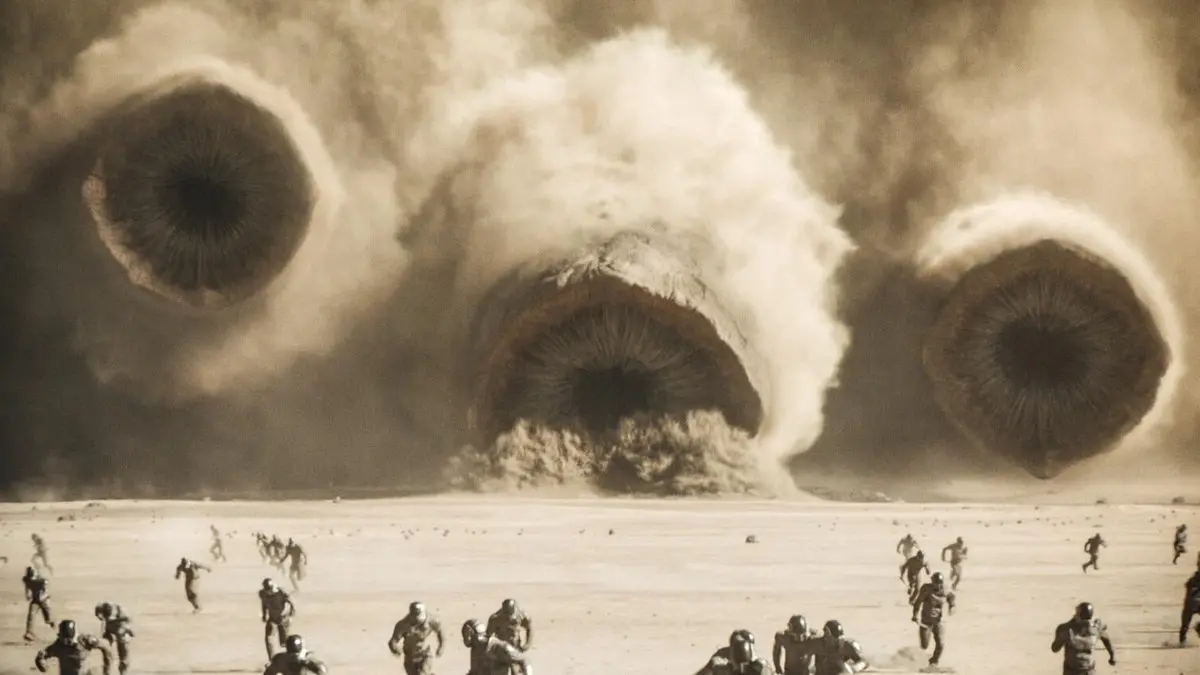
When a beloved book series is adapted for the big screen with a star-studded cast and a world-renowned composer, it's no surprise that it breaks box office records. Such was the case with Dune: Part Two, the second installment in Denis Villeneuve's adaptation of Frank Herbert's seminal science fiction novels. The film, which premiered in 2024, has become one of the highest-grossing sci-fi films in history, earning an estimated $715 million globally on a budget of $190 million.
A Brief Overview of the Dune Universe
Frank Herbert's Dune series, first published in 1965, is widely considered one of the greatest works of science fiction literature. Set in a distant future where noble houses vie for control of the desert planet Arrakis—the only source of the valuable spice melange—the story explores themes of politics, religion, ecology, and human potential. The first novel alone has sold over 20 million copies worldwide. Previous film adaptations, including David Lynch's 1984 version and a 2000 miniseries, met with mixed success, but Villeneuve's modern take has been praised for its fidelity to the source material and its cinematic grandeur.
Plot of Dune: Part Two
Dune: Part Two picks up immediately after the events of the first film. Paul Atreides (Timothée Chalamet) and his mother Lady Jessica (Rebecca Ferguson) have survived the brutal attack by the Harkonnens on House Atreides. They find refuge with the Fremen, the indigenous people of Arrakis. As Paul learns their ways and forms a deep bond with the Fremen warrior Chani (Zendaya), he begins to embrace his destiny as the prophesied Lisan al-Gaib—a messianic figure who will lead the Fremen to freedom. Meanwhile, the villainous Baron Vladimir Harkonnen (Stellan Skarsgård) and his sadistic nephew Feyd-Rautha (Austin Butler) plot to tighten their grip on the spice trade. The conflict escalates into a full-scale galactic war, forcing Paul to confront the immense burden of leadership and the dark consequences of prophecy.
Cast and Crew
The film boasts an extraordinary ensemble cast. Timothée Chalamet delivers a nuanced performance as Paul, capturing both his vulnerability and growing power. Zendaya brings depth and strength to Chani. Rebecca Ferguson is compelling as the manipulative yet protective Lady Jessica. Austin Butler transforms into the menacing Feyd-Rautha, while Josh Brolin, Dave Bautista, and Christopher Walken (as Emperor Shaddam IV) add weight to the supporting roles. Hans Zimmer, returning to compose the score, once again crafts a soundscape that blends orchestral grandeur with haunting vocal and electronic elements—including the memorable use of bagpipes to evoke the Fremen's culture.
Box Office Success and Critical Reception
Dune: Part Two grossed nearly $715 million worldwide, making it the second-highest-grossing film of 2024 at the time of its release, behind only Deadpool & Wolverine. This figure more than doubles the $410 million earned by its predecessor, Dune: Part One (2021). The film also received widespread critical acclaim, with praise for its visual effects, direction, performances, and storytelling. On Rotten Tomatoes, it holds a 94% approval rating from critics and a 95% audience score. Many reviewers have called it one of the best sci-fi epics since The Lord of the Rings trilogy.
The success is particularly notable given the challenges facing the theatrical industry post-pandemic. The film's strong word-of-mouth and IMAX screenings contributed to its longevity in theaters. It also won several technical awards, including Best Visual Effects and Best Sound at the Academy Awards.
Where to Watch Dune: Part Two
For those who missed the theatrical run, Dune: Part Two is now available for streaming on HBO Max in the United States and various international markets. In Germany, the film aired on RTL on May 14, 2025, and is also available on demand via RTL+ and HBO Max. Additionally, the film can be rented or purchased on Amazon Prime Video. The first film, Dune: Part One, is also streaming on HBO Max, making it easy for new viewers to catch up on the story.
Themes and Cultural Impact
Beyond its box office numbers, Dune: Part Two has sparked renewed interest in Herbert's novels and their themes of ecology, colonialism, and messianic archetypes. The film critiques the dangers of charismatic leaders and the exploitation of natural resources—themes that resonate strongly in today's world. The portrayal of the Fremen as a resilient indigenous culture has also been praised for its depth, though some critics have noted the film's complex relationship with white savior narratives. Villeneuve has stated that he deliberately aimed to challenge those tropes by emphasizing Paul's internal conflict and the destructive nature of the prophecy.
The film's success has also boosted the careers of its young leads. Timothée Chalamet and Zendaya have become two of the most bankable stars in Hollywood, with upcoming projects including Dune: Part Three, scheduled for release in December 2026. The third installment will adapt Herbert's novel Dune Messiah, continuing Paul's story and exploring the consequences of his rise to power. Other cast members like Austin Butler and Florence Pugh (who plays Princess Irulan) are set to reprise their roles.
Comparison with Other Sci-Fi Blockbusters
With a worldwide gross of $715 million, Dune: Part Two ranks among the top-grossing sci-fi films of all time. It surpasses classics like The Matrix Reloaded ($742 million adjusted) and Interstellar ($731 million). However, it still trails behind films like Avatar ($2.9 billion), Star Wars: The Force Awakens ($2.07 billion), and Jurassic World ($1.67 billion). Notably, Dune: Part Two achieved its success without the advantage of a pre-existing film franchise—only the book series—and with a more serious tone that appeals to adult audiences more than to children or families. This positioning makes it a unique triumph in contemporary cinema.
The Soundtrack: A Masterpiece of Evocative Music
Hans Zimmer's score for Dune: Part Two is as integral to the film's impact as its visuals. The composer, known for his work on Inception, Gladiator, and The Dark Knight, heavily incorporates instruments and vocals that evoke the harsh beauty of Arrakis. The use of bagpipes, which were actually played by a traditional piper, gives the Fremen a distinct and haunting musical identity. Zimmer also uses metallic percussion and manipulated orchestral sounds to represent the Harkonnens' industrial brutality. The soundtrack album debuted at number one on the Billboard Classical Crossover chart and received multiple award nominations. The film's sound design, including the iconic 'worm' rumble, has been praised for creating an immersive theater experience.
Production and Visual Effects
Director Denis Villeneuve insisted on practical effects whenever possible, from building full-scale sets of the Fremen sietches to using real sand dunes in Abu Dhabi and Jordan. The sandworms were rendered through a combination of practical models and CGI, resulting in some of the most realistic creature effects ever seen on film. Cinematographer Greig Fraser, who also shot the first film and The Batman, used natural light and infrared cameras to capture the desert landscape in stunning detail. The visual effects team, led by Paul Lambert, developed new techniques for simulating the movement of spice and sand, earning the film a BAFTA for Best Special Visual Effects. The production budget of $190 million is considered modest for a film of this scale, demonstrating Villeneuve's efficient use of resources.
Future of the Franchise
Following the success of Dune: Part Two, Warner Bros. Pictures and Legendary Entertainment have greenlit Dune: Part Three, which will adapt Frank Herbert's second novel, Dune Messiah. The sequel is expected to begin production in late 2025 and target a December 2026 release. The narrative of Dune Messiah takes place twelve years after the events of Part Two, with Paul Atreides now ruling as Emperor. It deals with the political and personal costs of his messianic rise, including a conspiracy against him. Villeneuve has expressed interest in adapting the third book, Children of Dune, as well. Meanwhile, the HBO Max spin-off series Dune: Prophecy, set 10,000 years before the films, explores the origins of the Bene Gesserit sisterhood and premieres later this year. The expansion of the Dune universe into both film and television ensures that Herbert's world will continue to captivate audiences for years to come.
Source: watson.de News