

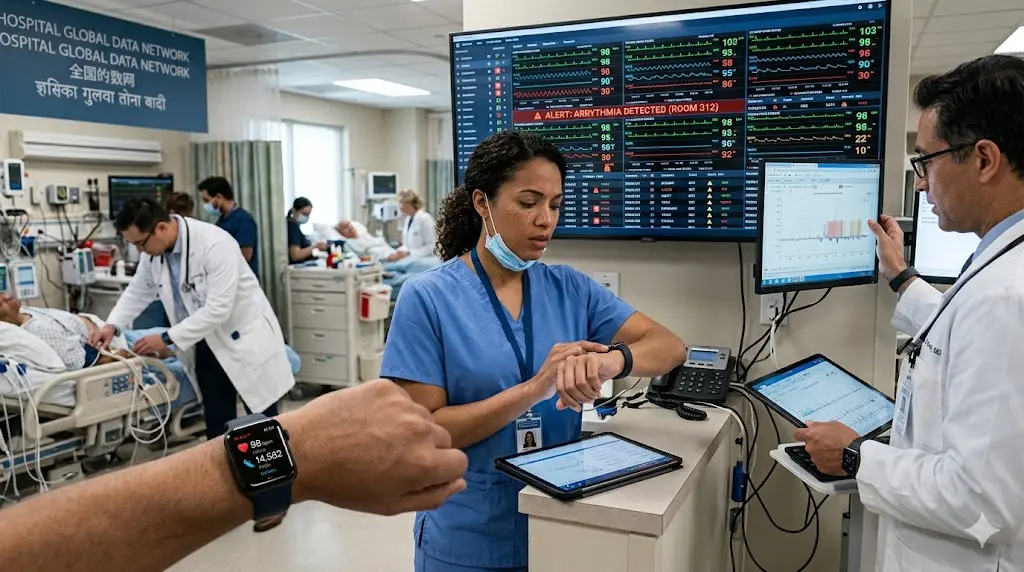
Wearable technology trends are becoming a serious topic in healthcare because these devices are no longer just fitness tools—they’re continuous medical data collectors. You’ve probably seen them everywhere now, from smartwatches to health bands tracking everything from heart rate to sleep cycles.
What’s really happening is a shift where personal health data is being collected outside hospitals, often without people fully realizing how much information is being generated and shared.
Wearable technology is a growing concern in healthcare because it continuously collects sensitive health data, raises privacy questions, and influences medical decisions outside traditional clinical settings. While it improves monitoring and early detection, it also creates risks around data security, accuracy, and over-reliance on consumer devices.
What Is Wearable Technology in Healthcare and Why Does It Matter?
Wearable Health Devices: Electronic tools worn on the body that collect, analyze, and transmit personal health data such as heart rate, sleep, activity, and sometimes medical indicators.
Wearable tech in healthcare isn’t just about tracking steps anymore. It’s about constant, real-time health surveillance happening in everyday life.
Here’s the thing—health monitoring used to happen during appointments. Now it happens all day, every day, whether you’re thinking about it or not.
In my experience, people initially love the convenience. They feel more in control. But over time, many start reacting emotionally to small changes in data they barely understand.
What most people overlook is that more data doesn’t always mean better health decisions. Sometimes it creates unnecessary anxiety or misinterpretation.
Expert tip: If you’re using wearable data for health decisions, focus on long-term patterns, not daily fluctuations.
Why Wearable Technology Trends Matter in Healthcare in 2026
In 2026, wearable technology trends are shaping healthcare discussions globally because they sit between personal wellness and clinical decision-making.
Let me be direct. We’re no longer talking about optional gadgets. These devices are slowly becoming part of healthcare ecosystems.
What I’ve noticed is that doctors are increasingly receiving patient-generated data before appointments even begin. That changes the dynamic completely.
There’s also a tension building. On one hand, wearables improve early detection. On the other hand, they introduce uncertainty when data is inconsistent or misinterpreted.
At least from what I’ve seen, the biggest concern isn’t technology itself—it’s overconfidence in it.
Expert tip: Treat wearable data as supportive evidence, not a final diagnosis.
How Wearable Technology Impacts Healthcare Systems — Step by Step
Wearable technology affects healthcare systems through a layered process that evolves over time.
1. Continuous Data Collection
Devices gather health metrics 24/7, creating massive personal datasets.
2. Data Syncing to Platforms
Information is transmitted to apps, cloud systems, or healthcare dashboards.
3. Pattern Detection
Algorithms identify trends like irregular heartbeats or sleep disruptions.
4. Health Alerts Generation
Users receive warnings or recommendations based on detected changes.
5. Clinical Integration
Some healthcare providers review wearable data alongside medical records.
6. Long-Term Health Monitoring
Data accumulates over time, shaping preventive care strategies.
This sounds smooth on paper, but in reality, each step introduces questions about accuracy and responsibility.
Common Misconception: Wearables Are Fully Accurate Medical Tools
A lot of people assume wearable devices are as accurate as clinical equipment.
That’s not always true.
Here’s a counterintuitive point—wearables are often more useful for trend tracking than precise measurement. A single reading might be off, but patterns over weeks can still be meaningful.
I’ve personally seen cases where people panic over one abnormal reading, only to find it was a sensor glitch or temporary condition.
Expert tip: Never base urgent medical decisions on a single wearable reading.
Expert Insights on What Actually Matters in Wearable Healthcare
From my experience, the biggest issue isn’t adoption—it’s interpretation.
First, people often don’t understand what the numbers mean. A heart rate spike might be normal during stress, but without context, it feels alarming.
Second, data overload is real. More metrics don’t automatically lead to better health decisions.
Third—and this is something I didn’t expect early on—some users develop dependency on constant health feedback. They feel uneasy without checking their devices.
I remember trying a wearable device myself for continuous tracking. At first, it felt empowering. After a while, I found myself checking it more than I needed to, even during normal activities. That shift was subtle but noticeable, and honestly a bit unsettling.
Expert tip: Set intentional breaks from health tracking to avoid over-monitoring behavior.
Real-World Examples of Wearable Technology in Healthcare
In one case, wearable devices helped detect early signs of irregular heart activity in users who had no prior symptoms. That early warning allowed them to seek medical help before conditions worsened.
In another situation, athletes used wearable data to optimize recovery, but later discovered inconsistent readings due to environmental factors like temperature and motion interference.
What most people miss is that wearables are influenced by context more than we assume. They don’t operate in a controlled medical environment.
Why Wearable Technology Raises Concerns in Public Health
Wearable tech raises concerns not because it is harmful by default, but because of how it is used at scale.
Here’s the thing—millions of people are generating health data daily, but not all of it is interpreted correctly or securely stored.
Privacy is one issue. Accuracy is another. But there’s also a third layer that’s often ignored: behavioral impact.
People start adjusting habits based on incomplete information, sometimes unnecessarily.
Expert tip: Public health systems need clear guidelines on how consumer-generated data should be used in clinical settings.
Step-by-Step: How Healthcare Systems Adapt to Wearable Data
Healthcare systems are gradually integrating wearable technology in structured ways:
Defining acceptable data sources from consumer devices
Setting standards for data accuracy and reliability
Training medical staff on interpreting wearable data
Integrating data into electronic health systems
Creating patient guidelines for safe usage
Each step requires careful calibration to avoid misinterpretation or overdependence.
A Slightly Unexpected Reality About Wearable Tech
Here’s something that surprises people.
Wearable technology can sometimes increase health anxiety rather than reduce it.
I’ve seen users become overly focused on small fluctuations in data, even when those changes are clinically irrelevant. That creates unnecessary stress, which ironically affects health itself.
So instead of improving wellness in every case, it can sometimes complicate it.
Expert tip: If a metric causes more stress than clarity, it might not be useful for daily tracking.
People Most Asked About Wearable Technology in Healthcare
Why is wearable technology a concern in healthcare?
Wearable technology is a concern because it collects continuous health data, raises privacy issues, and can lead to misinterpretation without proper medical context.
Are wearable devices accurate for medical use?
They are useful for tracking trends but not always precise enough for clinical diagnosis. They should complement, not replace, medical evaluations.
Can wearable data improve health outcomes?
Yes, when used correctly. It can help detect early warning signs and support preventive care when interpreted properly by professionals.
What is the biggest risk of wearable health tech?
The biggest risk is over-reliance on inaccurate or misunderstood data, which can lead to unnecessary stress or incorrect health decisions.
Our Network site provides related offering Guest Posting Services and Press Release News Submission, seo and local business listing in uk solutions designed to improve SEO ranking, brand visibility, and organic traffic through high authority backlinks and instant publishing opportunities. Platforms such as press release distribution services and digital marketing services help businesses achieve stronger media coverage and scalable online presence across competitive markets. These services support agencies, startups, and SEO professionals aiming for consistent growth and targeted digital exposure.