

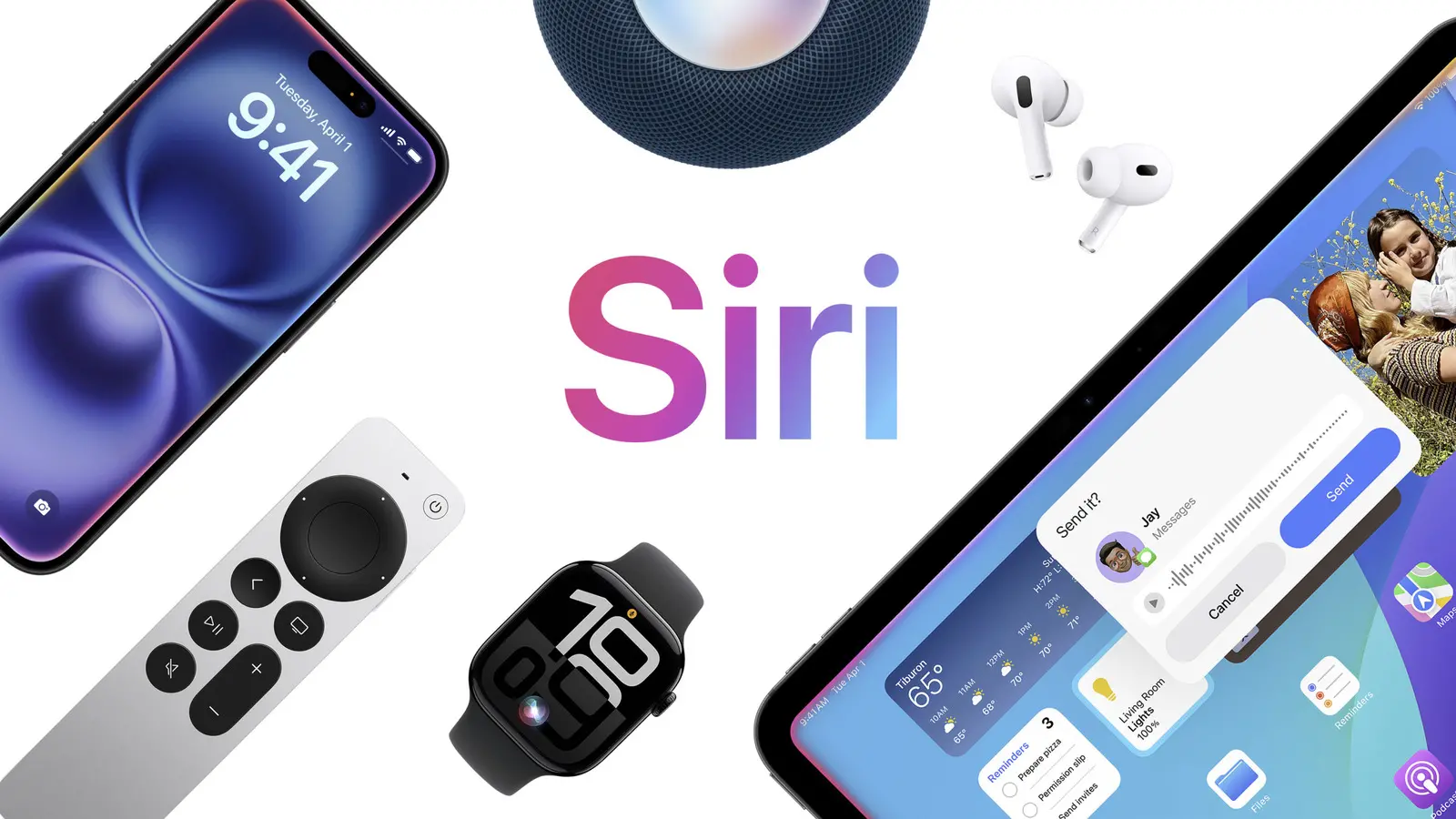
Apple has agreed to pay $250 million to settle a class action lawsuit that accused the company of misleading iPhone buyers in the United States about the launch timeline of its AI-powered Siri assistant. The lawsuit, filed on behalf of customers who purchased iPhone 16 lineup and iPhone 15 Pro devices, claimed that Apple advertised a more personalized and context-aware Siri as part of Apple Intelligence during WWDC 2024 but failed to deliver the feature nearly two years later.
According to reports from The Financial Times, the proposed settlement must still be approved by a judge. If approved, it will provide financial compensation to buyers who expected the upgraded Siri to be available on their new iPhones. Notably, Apple does not have to admit any wrongdoing or liability as part of the agreement. The company has consistently maintained that its marketing was not misleading, even as it slowly rolled out other components of Apple Intelligence over the course of 2024 and 2025.
The core of the controversy lies in Apple's promotional campaign for the iPhone 16, which heavily featured the new Siri capabilities. The company showed off a Siri that could understand the context of what was on a user's device and take actions within apps on their behalf. However, that feature never materialized. Apple did not publicly acknowledge the delay until March 2025, more than five months after the iPhone 16 launch. At that point, the company pulled television and online ads that had been running in the lead-up to the iPhone release, which prominently demonstrated the new Siri functionalities.
Background of Apple Intelligence and Siri's Evolution
Apple Intelligence was announced at WWDC in June 2024 as a suite of AI-powered features spanning text editing, image generation, and integration with ChatGPT. The company promised that these capabilities would be deeply integrated into the iPhone, iPad, and Mac experience. While features like writing tools, image playground, and ChatGPT integration did roll out gradually from late 2024 through 2025, the centerpiece of Apple Intelligence—the new Siri—was repeatedly delayed.
Siri has long been considered a laggard in the AI assistant space compared to competitors like Google Assistant and Amazon Alexa. With the rise of generative AI following the launch of ChatGPT in late 2022, Apple faced growing pressure to modernize its voice assistant. The promise of an on-device AI that could understand personal context and orchestrate actions across apps was seen as Apple's answer to the conversational capabilities of ChatGPT and Google's Gemini. The failure to deliver this upgrade on time has not only led to legal consequences but has also damaged Apple's reputation for reliability and execution.
The class action lawsuit was filed in the U.S. District Court for the Northern District of California in early 2025. Plaintiffs argued that Apple knowingly advertised features that were not ready for prime time, thereby inflating the value of the iPhone 16 and iPhone 15 Pro. The suit claimed that Apple's marketing created a false impression that the new Siri would be available at launch or shortly thereafter. In reality, development proved more challenging than anticipated, leading to months of silence before Apple finally confirmed the delay.
Technical Challenges and Partnership with Google
The delay has been attributed partly to the immense technical difficulty of building a truly context-aware on-device AI assistant. Apple's approach required the Siri to run locally on the device using Apple's own neural engines, while also leveraging cloud computing for more complex requests. The company reportedly struggled to achieve the necessary accuracy and latency for features like summarizing documents, extracting information from images, and performing multi-step actions across apps.
To salvage the situation, Apple entered into a partnership with Google to use the company's Gemini models as a backend for the new Siri. This collaboration was announced in late 2025, indicating that Apple needed external AI expertise to bring its vision to life. The new Siri, now expected to ship with iOS 27 in 2026, will combine Apple's on-device intelligence with Google's powerful large language models. This integration will allow Siri to handle complex queries, generate responses, and perform tasks that require a deep understanding of language and context.
The partnership with Google is a significant strategic move for Apple, which has traditionally favored in-house development. It reflects the increasing difficulty of competing in the AI arms race without tapping into the expertise of established players. By leveraging Gemini, Apple can accelerate the delivery of its AI assistant while maintaining its commitment to user privacy through on-device processing where possible.
Impact on Consumers and the Tech Industry
The $250 million settlement will provide varying levels of compensation to eligible iPhone buyers. The exact payout per customer has yet to be determined, but it is expected to be in the range of $50 to $200 per device, depending on the model and number of claims filed. The settlement covers US residents who purchased an iPhone 16, iPhone 16 Plus, iPhone 16 Pro, iPhone 16 Pro Max, or iPhone 15 Pro from September 2024 onward. Customers who bought multiple devices may file claims for each.
Beyond the financial compensation, the case highlights the growing scrutiny of tech companies' marketing claims related to AI features. As generative AI becomes a key differentiator for smartphones, consumers are increasingly wary of promises that fail to materialize. The Federal Trade Commission (FTC) has also signaled interest in cracking down on "AI washing"—the practice of exaggerating or misrepresenting a product's AI capabilities. Apple's settlement could set a precedent for other companies facing similar lawsuits over delayed or non-existent AI features.
The delay of the new Siri has also given competitors an opening. Google Assistant, already integrated with Gemini, offers a far more conversational and capable experience. Amazon is revamping Alexa with generative AI, and Samsung has launched its Galaxy AI suite with real-time translation and summarization features. Apple's slow pace risks losing customer loyalty, especially among early adopters who have invested heavily in the Apple ecosystem and expected the company to lead in AI.
Nevertheless, Apple's brand remains strong, and many customers are willing to wait for a polished product. The company's insistence on privacy and on-device processing may ultimately yield a superior assistant, even if it arrives later than promised. The integration with Google's Gemini suggests that Apple is now willing to compromise on its walled-garden approach to deliver functionality that users demand.
In the meantime, iPhone users will have to continue relying on the existing Siri, which remains limited in its capabilities. The lawsuit and settlement serve as a reminder that even the most powerful tech companies are not immune to the challenges of AI development. As the industry hurtles toward an AI-centric future, the gap between marketing hype and actual product readiness will likely remain a source of tension for consumers and regulators alike.
Source: Engadget News