

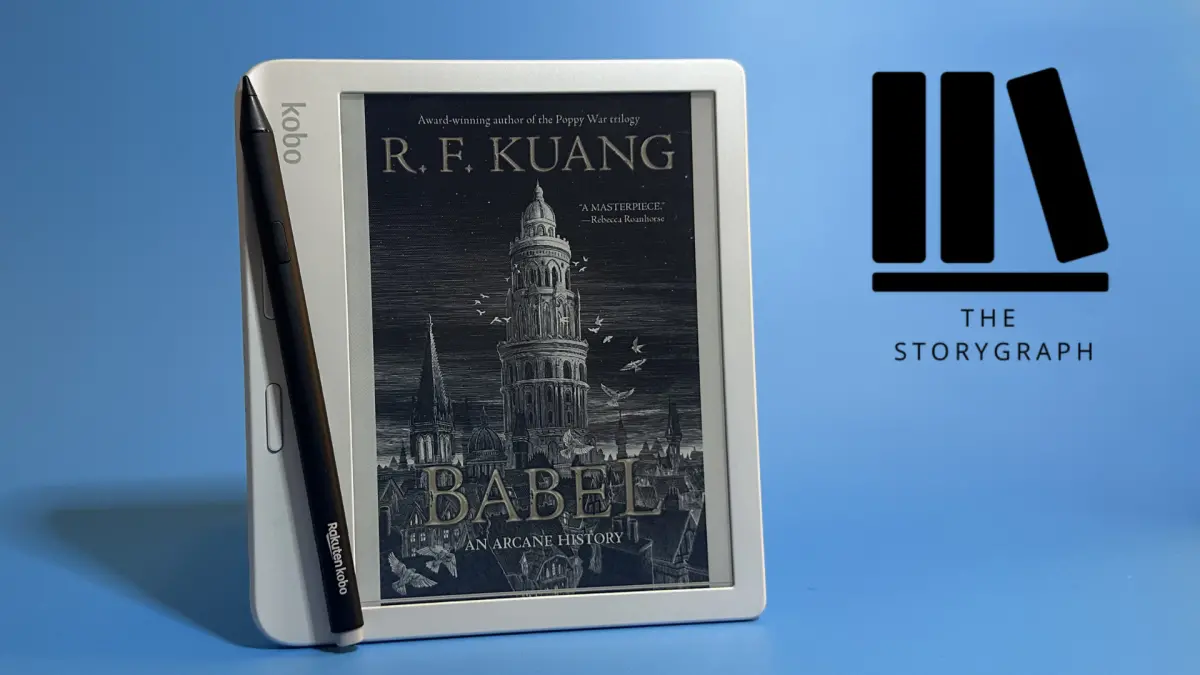
If you want an e-reader but don't want anything to do with Amazon, the alternative is a Rakuten Kobo e-reader. Kobos are speedy, easy-to-use, and a great value, but now, they're teaming up with another bookish company for the ultimate reading integration. The Storygraph, a platform for tracking everything you read, is now coming to all Kobo devices in June 2024. The integration syncs Kobo e-readers and apps to a Storygraph account. That means your reading progress will automatically be captured in your Storygraph account, so when you finish a book, it's marked as read without any additional effort from you.
The announcement was made by Nadia Odunayo, Founder & CEO of The Storygraph, who stated: "Our mission is to make reading lives better, and removing the friction from tracking is one of the most direct ways we can do that." The new partnership between Rakuten Kobo and Storygraph further cements both brands as anti-Amazon alternatives. This collaboration arrives at a time when many readers are actively seeking alternatives to the Amazon-dominated book ecosystem.
Background: The Amazon vs. Kobo Rivalry
So much of the book industry is dominated by Amazon. The mega-brand makes Kindles, the most popular e-readers, and is a major online bookseller of physical and e-books. Since 2013, Amazon has owned Goodreads, the original book tracking platform. Kindles and Goodreads are already integrated, offering features similar to those in the Kobo and Storygraph integration, including progress tracking. However, with plenty of readers feeling resistant to Amazon and the impact it has had on independent bookstores, there's a desire for alternatives, whether that be with e-readers or a place to track reading.
Kobo, owned by Japanese e-commerce giant Rakuten, has long positioned itself as the more reader-friendly, open-platform alternative. Kobo e-readers support more file formats than Kindle (including EPUB, PDF, and even some DRM-free formats), allow integration with public libraries via OverDrive, and offer a built-in Pocket integration for saving web articles. The addition of Storygraph, which is known for its data-driven approach to reading habits, is yet another step in differentiating Kobo from the Kindle ecosystem.
What Is The Storygraph?
The Storygraph launched in 2019 as a direct competitor to Goodreads. It was founded by Nadia Odunayo, a former data scientist and software engineer, who wanted to build a platform that focused on diverse recommendations, detailed reading stats, and a more inclusive community. Unlike Goodreads, which has faced criticism for its recommendation algorithm and lack of diversity in book lists, Storygraph offers features such as mood-based recommendations (e.g., adventurous, funny, dark), content warnings submitted by community members, and a reading journal that allows for half-star ratings and detailed notes.
The platform gained significant traction in 2021 and 2022, especially among readers who were disillusioned with Amazon's ownership of Goodreads. By 2023, Storygraph had over 1.5 million active users, with many using it as their primary book tracking tool. The integration with Kobo means that users no longer need to manually log their reading progress or remember to sync; it happens automatically as they read on their Kobo device.
Key features of the Kobo-Storygraph integration include:
- Automatic progress syncing: When you start a book on Kobo, your progress (percentage read) is automatically updated in your Storygraph account.
- Finish tracking: Once you mark a book as complete on Kobo, it is automatically tagged as read on Storygraph.
- No additional app needed: The integration works directly through the Kobo firmware update that will roll out in June. No need to install separate apps.
- Backwards compatibility: All Kobo models—including the Clara 2E, Libra 2, Sage, Elipsa, and the newly released Kobo Clara Colour and Kobo Libra Colour—will support the integration.
Expanding the E-Reader Ecosystem
This move is part of a broader trend of Kobo building a more comprehensive reading ecosystem. In recent years, Kobo has introduced audiobook support (though limited to select markets), improved its annotation and note-taking features on larger devices like the Elipsa, and released color e-ink devices (the Clara Colour and Libra Colour) that compete directly with Amazon's Kindle offerings. The Storygraph partnership adds a social and tracking layer that was previously only available through manual input or third-party workarounds.
For readers who are deeply embedded in the Amazon ecosystem, switching to Kobo might seem daunting because of the loss of Goodreads integration. However, Kobo has made it easier by offering seamless transfer of reading lists and history from Goodreads to Storygraph directly within the Storygraph platform. Users can import their entire Goodreads library, including ratings, reviews, and shelves, into Storygraph in just a few clicks. This reduces the friction of switching and encourages readers to move away from Amazon.
Moreover, Kobo devices have always prioritized open standards. They support Adobe Digital Editions for library loans, and they allow users to transfer books from their computer without needing proprietary software. The addition of Storygraph integration does not change that; it simply enhances the reading experience by providing rich data and community features.
Storygraph's Unique Value Proposition
One of the reasons the Kobo-Storygraph partnership is so compelling is because Storygraph's data features are more sophisticated than Goodreads. For example, Storygraph provides detailed reading stats such as pages read per day, average rating, distribution of fiction vs. non-fiction, and even a breakdown of the pace of books you read (fast-paced, medium-paced, or slow-paced). These statistics help readers better understand their reading habits and make more informed choices about future books.
Another standout feature is the "mood" and "genre" tagging system. Users can tag books with up to three mood tags (e.g., tense, hopeful, romantic) and up to three genre tags (e.g., literary, horror, historical). This enables very precise recommendations. For instance, if you're in the mood for an adventurous fantasy book with a touch of humor, Storygraph can suggest titles that match that exact combination. Goodreads, by contrast, relies primarily on genre and average ratings, which often leads to generic suggestions.
Storygraph also emphasizes content warnings—a feature that has grown in popularity among readers who want to be informed about potentially triggering or sensitive material before reading. The community can submit content warnings, which are then moderated and displayed on book pages. This transparency is especially appreciated in genres like thriller, horror, or romance, where certain themes might be uncomfortable for some readers.
Industry Impact and Consumer Choice
The Kobo-Storygraph integration is more than just a nice-to-have feature; it represents a significant shift in the e-reader market. For years, Amazon's tight integration of Kindle hardware, Kindle Store, Kindle Unlimited, and Goodreads created a walled garden that made it difficult for users to stray. However, the rise of anti-Amazon sentiment, combined with increasing demand for ethical and diverse book platforms, has opened the door for competitors like Kobo and Storygraph.
Rakuten Kobo has seen steady growth in markets like Canada, Japan, and parts of Europe, but it has yet to make a major dent in Amazon's dominant US market share. Partnerships like this one could be the key to attracting more American readers, especially those who are already using Storygraph on their phones or browsers. The fact that the integration is automatic (no manual syncing required) removes the biggest barrier to adoption.
Book industry analysts have praised the move as a win for consumer choice. "This is exactly the kind of innovation that pushes back against Amazon's monopoly," said one industry expert. "By offering features that Amazon cannot replicate quickly (because of their legacy systems), Kobo and Storygraph create a compelling alternative that is not just anti-Amazon but genuinely superior in some aspects."
Beyond the technical features, the cultural impact is important. Storygraph has cultivated a community that is more inclusive and respectful than Goodreads, which has been plagued by review bombing, harassment, and issues with moderating hate speech. By tying its product to Storygraph, Kobo is signaling that it values ethical design and community health.
How to Get Started
When the firmware update rolls out in June 2024, Kobo users will need to connect their Storygraph account in the device settings. The process is straightforward: go to Settings > Sync > Storygraph, log in or create an account, and toggle on automatic syncing. Once enabled, every book you read on your Kobo will appear in your Storygraph library. You can also choose to sync only highlighted books or all books. The integration works both ways—if you finish a book on Storygraph (by marking it as read on the app), your Kobo will also update.
For new users, The Storygraph offers a free basic account with unlimited tracking. There is also a paid Plus subscription ($9.99 per month or $99.99 per year) that unlocks advanced stats, import/export features, and community groups. However, the basic account includes all the core integration features needed for tracking.
The update will be available for the following Kobo models: Clara 2E, Clara HD, Libra 2, Libra H2O, Sage, Elipsa, Elipsa 2E, and the Kobo Android app. The newest color models (Clara Colour and Libra Colour) will also support it out of the box.
Source: Mashable News