

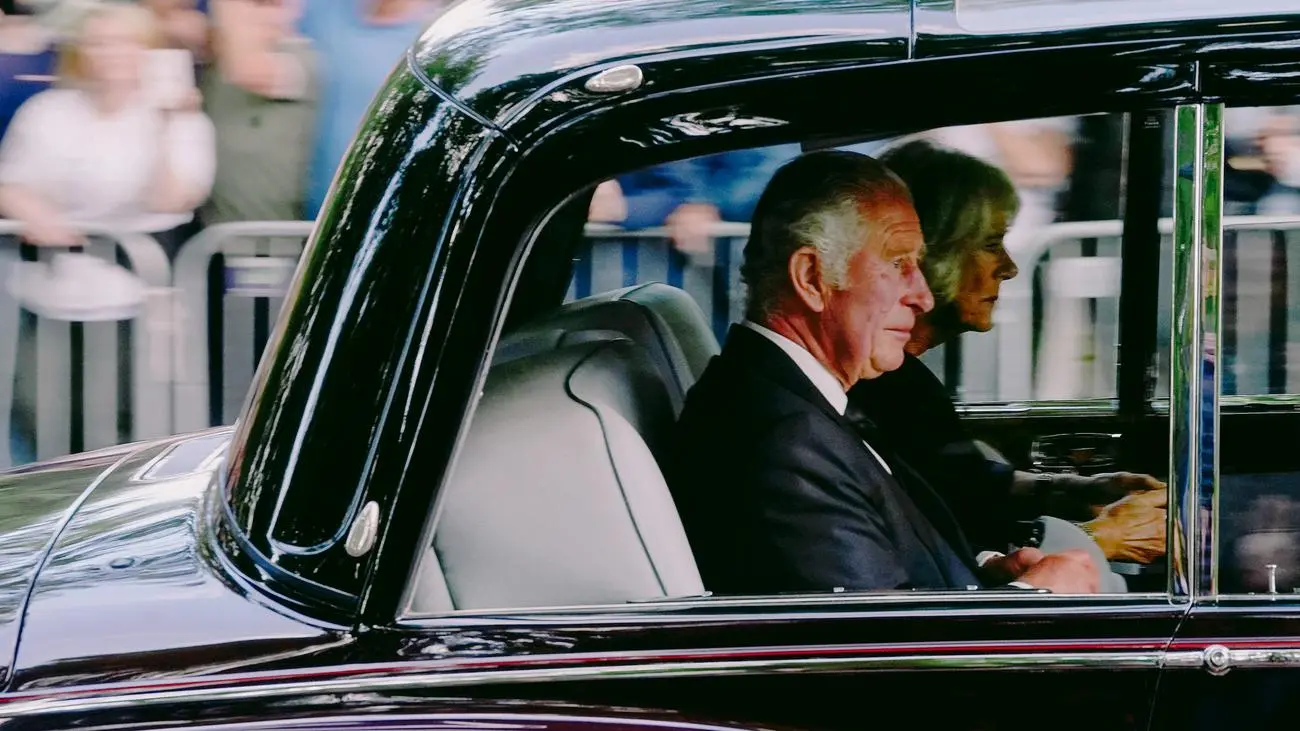
Queen Elizabeth II, the United Kingdom's longest-reigning monarch, died peacefully at Balmoral Castle in Scotland on Thursday, September 8, 2022, at the age of 96. Her death was announced by Buckingham Palace at 19:30 BST, sending shockwaves across the nation and the world. Within hours, her eldest son, Charles, became King Charles III, marking the beginning of a new era for the British monarchy.
The Final Hours and Announcement
The Queen's health had been in decline for several months, but the end came swiftly. She was at her Scottish estate, Balmoral, where she had retreated for the summer. On the morning of September 8, Buckingham Palace issued a statement expressing concern for her health, prompting members of the royal family, including Prince Charles, Camilla, Prince William, Prince Harry, and others, to rush to her bedside. The announcement of her death at 19:30 triggered Operation London Bridge, the meticulously planned protocol for the monarch's passing. Within minutes, flags across the country were lowered to half-mast, and the official notification was posted on the gates of Buckingham Palace.
Key Events on the Day of Her Passing
- The Queen died at 15:10 BST on September 8, 2022, though the public was informed later.
- Buckingham Palace confirmed her death at 19:30, triggering national mourning.
- King Charles III returned to London from Balmoral on September 9, landing at Northolt Airport and proceeding to Buckingham Palace, where he greeted crowds and viewed the floral tributes.
- Charles held his first audience with Prime Minister Liz Truss at Buckingham Palace on September 9.
- At 17:00 BST, King Charles III delivered his first address to the nation, pledging to follow his mother's example and appointing his son William as Prince of Wales.
- A memorial service was held at St. Paul's Cathedral on the evening of September 9, attended by Truss and other dignitaries.
- Gun salutes were fired across the country: 96 rounds, one for each year of the Queen's life.
- Bells tolled at Westminster Abbey and other churches.
- The national anthem was sung as "God Save the King" for the first time in 70 years.
- Media outlets paused advertising out of respect, and Netflix halted production on The Crown.
The Reign of Queen Elizabeth II
Elizabeth Alexandra Mary Windsor was born on April 21, 1926, in London. She became queen unexpectedly in 1952 at the age of 25 after the death of her father, King George VI. Her reign spanned seven decades, making her the longest-reigning British monarch and the longest-reigning female head of state in history. During her 70 years on the throne, she oversaw tremendous social and political change: the end of the British Empire, the rise of the Commonwealth, the decolonization of Africa and Asia, the Cold War, the digital revolution, and the United Kingdom's relationship with Europe. She was a symbol of stability and continuity, meeting 15 British prime ministers (from Winston Churchill to Liz Truss) and dozens of world leaders. Her annual Christmas broadcasts became a fixture of British life, and her public engagements, from state visits to walkabouts, endeared her to millions.
The Queen's personal life was marked by both triumph and tragedy. She married Prince Philip of Greece and Denmark in 1947; their union lasted 73 years until his death in 2021. She had four children: Charles, Anne, Andrew, and Edward. Her reign was not without controversy, including the divorces of her children, the death of Princess Diana in 1997, and the scandal surrounding Prince Andrew. Yet through it all, she maintained a stoic and non-political demeanor, earning respect across the political spectrum.
King Charles III: The New Monarch
Charles Philip Arthur George became king at the age of 73, the oldest person ever to ascend the British throne. He had been the longest-serving heir apparent in British history, having been Prince of Wales since 1958. His accession was formalized by the Accession Council on September 10, 2022, but he immediately began acting as sovereign upon the Queen's death. In his first speech as king, delivered from the Blue Drawing Room at Buckingham Palace, Charles spoke of his "profound sorrow" and paid tribute to his mother's "life of service." He said, "As the Queen herself did with such unswerving devotion, I too now solemnly pledge myself, throughout the remaining time God grants me, to uphold the constitutional principles at the heart of our nation." He also expressed love for his sons William and Harry, including Harry's wife Meghan Markle, signaling a desire for reconciliation after years of tension.
Charles has long been known for his advocacy on environmental issues and architecture, as well as his charitable work through The Prince's Trust. His reign is expected to be shorter than his mother's due to his age, but he has already signaled a desire to modernize the monarchy while preserving its traditions.
National Mourning and Tributes
The United Kingdom entered a 10-day period of national mourning, with the state funeral scheduled for Monday, September 19, 2022 at Westminster Abbey. The Queen's coffin will lie in state at the Palace of Westminster for four days, allowing the public to pay their respects. On the day of her death, thousands of people gathered outside Buckingham Palace, Windsor Castle, and Balmoral to lay flowers, light candles, and share memories. World leaders offered condolences, including U.S. President Joe Biden, French President Emmanuel Macron, German Chancellor Olaf Scholz, and many others. In Germany, President Frank-Walter Steinmeier wrote in the condolence book at the British Embassy in Berlin that the Queen had extended "a hand of reconciliation" to Germany after World War II, highlighting her role in healing old wounds.
The Queen's death also prompted heartfelt statements from Commonwealth nations, where she was head of state for 15 countries beyond the UK. In Canada, Australia, New Zealand, and other realms, tributes poured in. The flag at NATO headquarters was flown at half-mast. In the UK, Parliament convened in special session to pass motions of condolence, and Prime Minister Liz Truss paid tribute in the House of Commons, calling the Queen "the rock on which modern Britain was built."
What Happens Next
The days following the Queen's death involve a complex sequence of ceremonies and official events. On September 10, the Accession Council formally proclaimed Charles as king. On September 11, the Queen's coffin, draped in the Royal Standard of Scotland, was carried in a solemn procession from Balmoral to Edinburgh, where it rested at the Palace of Holyroodhouse and later at St. Giles' Cathedral. On September 12, the coffin was flown to London and taken to Buckingham Palace. On September 13, a ceremonial procession moved the coffin to the Palace of Westminster for the lying-in-state. The public queued for hours, and sometimes overnight, to file past the casket and pay their last respects. The state funeral on September 19 will be a day of national reflection, with a two-minute silence observed across the country. The Queen will be buried later that day at the King George VI Memorial Chapel in Windsor Castle, alongside her husband Prince Philip and her parents.
The transition to King Charles III will continue with his coronation, likely in 2023, though the exact date has not been set. In the meantime, the new king has already taken on his constitutional duties, including meeting with the prime minister and receiving the formal condolences of Parliament. His reign promises to be one of continuity but also change, as the monarchy adapts to a new generation and a changing world.
Source: DIE ZEIT News