

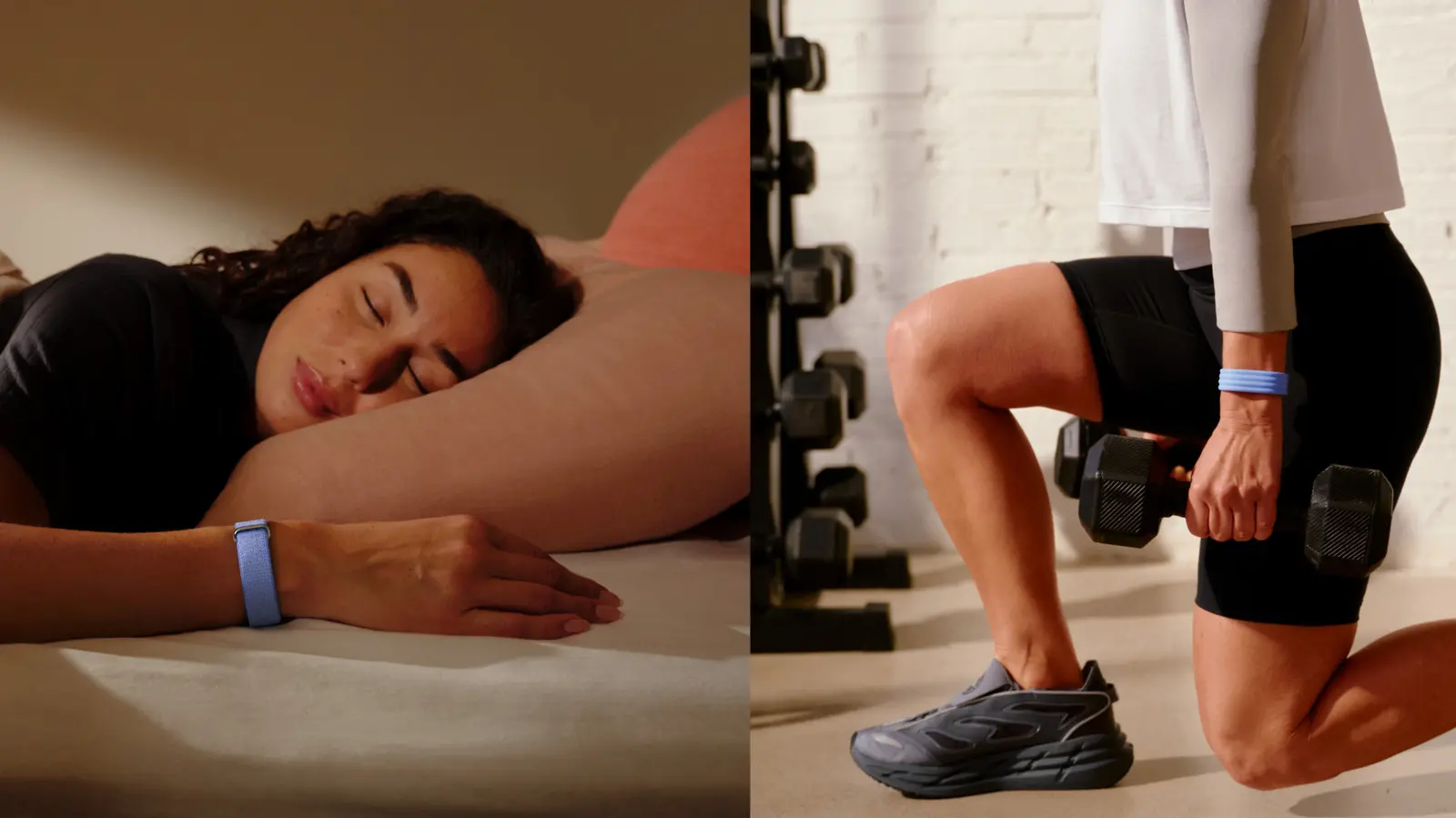
Google has officially unveiled the Fitbit Air, a screenless wearable that takes direct aim at the Whoop band market. First teased in March, the device is now available for pre-order at $100, with shipments beginning May 26. The Fitbit Air is essentially a Fitbit tracker stripped of its display, allowing users to wear it in a wristband, chest strap, or any other accessory that Google or third parties might develop. The name "Air" reflects its size: it is 25 percent smaller than the Fitbit Luxe and 50 percent smaller than the Inspire 3, weighing just 12 grams with a band and 5.2 grams without.
The lack of a screen means the Fitbit Air is a passive data collector, relying on its sensors and Google's algorithms to track heart rate, sleep stages, heart rate variability (HRV), and irregular heart rhythm notifications indicative of atrial fibrillation (AFib). It can automatically detect common exercises such as walking, running, cycling, rowing, and elliptical training. For manual logging, the accompanying app supports about 40 activity types, and users can add from a library of over 140 activities including archery, household chores, and kickboxing.
A key differentiator is the integration of Google's AI capabilities. The device is powered by advanced machine learning models that are 15 percent more accurate than previous iterations, particularly in sleep scoring and recovery analysis. Central to the experience is the Google Health Coach, a Gemini-powered conversational interface that can create dynamic, tailored fitness plans. Users can ask the coach for workout suggestions, proactive insights based on real-time performance data, and adjustments for changing schedules. The coach also works with Cycle Health and other vital medical information, with Google emphasizing data privacy and security.
The Fitbit Air offers three initial band options: a micro-adjustable Performance Loop Band, a sweatproof and wetproof Active silicone band, and an Elevated Modern Band designed as a fashionable bracelet. Google says the device is water-resistant to 50 meters but not officially waterproof. A special edition co-designed with basketball star Steph Curry includes a raised interior print for airflow and an additional water-resistant coating, priced at $130. All purchases come with three months of Google Health Premium.
Battery life is estimated at up to a week, with fast charging that provides a day of power in five minutes and a full charge in 90 minutes. The charger uses a magnetic, bi-directional design similar to the Pixel Watch 4's. Google plans to expand accessory options beyond wristbands, including potential chest straps, necklaces, or anklets, according to Rishi Chandra, general manager for Google Health.
The Fitbit Air represents Google's latest effort to integrate AI into health tracking, competing directly with screenless wearables like Whoop. By removing the screen, Google aims to offer a more comfortable, distraction-free experience while still delivering comprehensive fitness and health data. The device's small form factor and light weight are designed to be unnoticeable during sleep, work, or exercise. With advanced sleep tracking, HRV analysis, and AI coaching, the Fitbit Air positions itself as a tool for holistic wellness management.
Google's move into the screenless wearable segment follows the trend of companies like Whoop and Oura, which have gained popularity for their focus on recovery and readiness. The inclusion of a generative AI coach differentiates the Fitbit Air, potentially offering more personalized guidance than traditional fitness trackers. However, the reliance on a smartphone app for any interaction may limit its appeal for users who prefer glanceable information on a wrist display.
The Fitbit Air is available for pre-order directly from Google and through select retailers. The standard model costs $100, with the Steph Curry Special Edition priced at $130. Both include a three-month subscription to Google Health Premium, which unlocks additional insights and personalized coaching features. The device is expected to ship on May 26, putting it in competition with other summer launches from Apple and Samsung.
Google has not announced plans for a global rollout, but given Fitbit's existing market presence, the Air is expected to launch in multiple regions shortly after its US debut. The company is likely to expand accessories over time, leveraging the modular design of the tracker core. As the wearable market continues to evolve, the Fitbit Air represents a strategic bet on AI-driven health insights without the distraction of a screen.
Source: Engadget News