

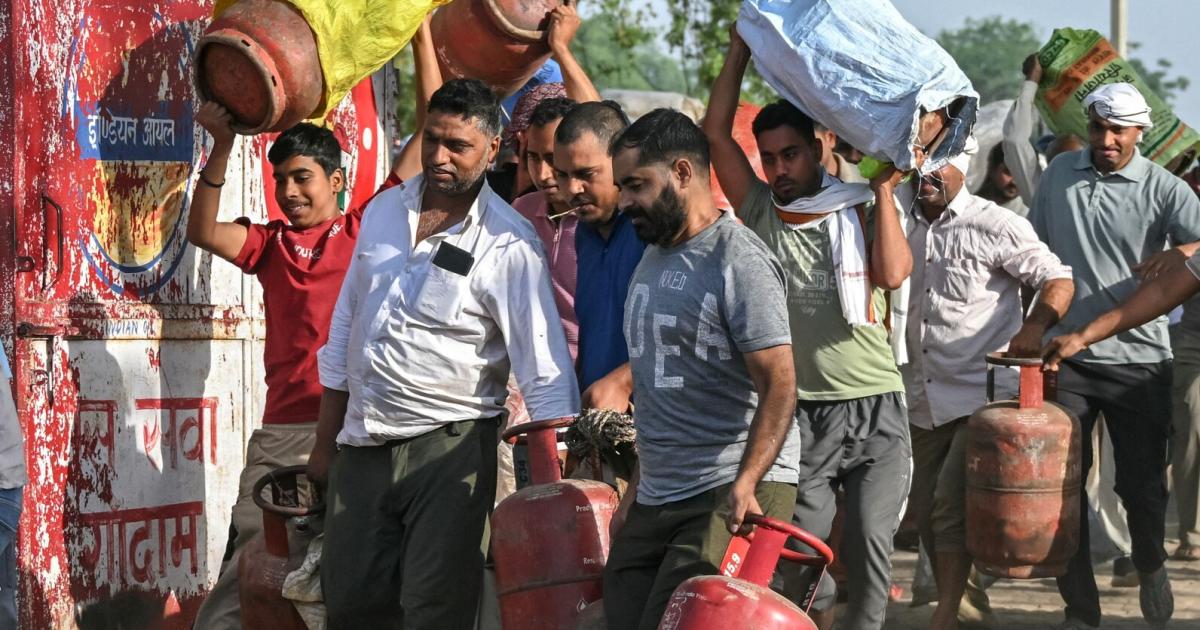
India, the world's most populous nation and third-largest oil importer, is reeling under the impact of the ongoing Iran war and the consequent blockade of the Strait of Hormuz. For over two months, the vital waterway—through which about a fifth of global oil passes—has been effectively closed. Saudi Aramco estimates that roughly one billion barrels of oil are now missing from global markets. The crisis has hit India disproportionately, as the country relies on imports for 90% of its crude oil and 60% of its liquefied petroleum gas (LPG), used primarily for cooking. Prime Minister Narendra Modi, fresh from electoral victories for his Hindu-nationalist Bharatiya Janata Party, delivered a stern address to the nation on Monday, warning of a tough year ahead and outlining a series of austerity measures.
Modi's key message: reduce consumption of petrol and diesel immediately. He urged citizens to use public transportation, form carpools, and accelerate the shift to electric vehicles. Remote work and videoconferencing should replace business travel wherever possible. Farmers were asked to halve their use of chemical fertilizers and adopt natural farming methods, as the Hormuz blockade has also triggered a severe fertilizer shortage. But perhaps the most striking appeal came on Sunday, when Modi, in his most urgent speech since the conflict began, asked every household to reduce cooking oil usage by 10%. "If every household reduces its consumption of cooking oil, it will be a great contribution to the motherland," he said. He also urged citizens to avoid all foreign travel for at least a year, including destination weddings, and to postpone gold purchases—a traditional mainstay of Indian weddings—to conserve foreign exchange reserves and support the ailing rupee, which has depreciated sharply against the US dollar.
Economic and Social Fallout
Despite the acute shortages, India has so far avoided fuel rationing or drastic price hikes at the pump. State-owned oil companies are absorbing the losses, but the strain is palpable. Food prices are rising, and the cost of LPG for cooking has already increased significantly. The social consequences are alarming: many factory workers, already living on the edge before the crisis, are leaving urban centers and returning to their home villages, where living costs are lower and state welfare programs are more accessible. While exact figures are elusive, a labor rights activist quoted in the Financial Times estimates that the number of migrants heading back could be in the hundreds of thousands. This reverse migration echoes the massive exodus seen during the COVID-19 lockdowns in 2020, raising fears of a humanitarian crisis. The government is scrambling to provide relief, but the scale of the challenge is enormous.
Historical Context and Global Implications
India's energy dependence has long been a strategic vulnerability. The country has built up strategic petroleum reserves, but they cover only about two weeks of consumption. The current crisis underscores the need for diversification. Modi has promoted renewable energy aggressively, aiming for 500 GW of non-fossil fuel capacity by 2030, but the transition is still in its early stages. Meanwhile, the global energy market is in turmoil. The Strait of Hormuz blockade has sent oil prices soaring, affecting not just India but the entire world economy. Energy analyst Fatih Birol of the International Energy Agency has warned that no country is immune to the crisis. India's predicament is particularly dire because it also imports large amounts of fertilizer and edible oils—both of which are now costlier and scarcer.
Social Media and Public Reaction
Modi's appeals have sparked a mixed response on social media. Some citizens have embraced the spirit of sacrifice, sharing tips on reducing oil usage and organizing community carpools. Others, however, express frustration at what they see as misplaced austerity—demanding that the government impose wealth taxes on corporations and the ultra-rich instead of burdening common people. The opposition Congress party has accused Modi of mismanaging the crisis and failing to secure alternative energy supplies. Nevertheless, the BJP's recent electoral successes suggest that Modi's popularity remains high, at least for now.
Long-Term Outlook
The immediate priority for India is to secure alternative sources of oil and gas. Talks are underway with Russia, the United States, and African producers, but logistical hurdles and price negotiations are complex. Modi's call for a year-long austerity drive indicates that the government expects the crisis to be prolonged. The country may need to accelerate investments in domestic oil and gas exploration, as well as in renewable energy and electric mobility. For ordinary Indians, the coming months will be a test of resilience. The price of cooking oil, a staple in every kitchen, is a daily reminder of the war far away. As Modi himself stated, "This is a time for every patriot to step up. Our sacrifices today will secure our future."
The crisis has already reshaped India's economic landscape. The stock market has seen heavy selling, and the rupee continues to weaken. The central bank is expected to raise interest rates to curb inflation, which could slow down economic growth. But the human cost is harder to quantify. The reverse migration of workers is a stark indicator of distress. In the villages, families are preparing for a lean year, rationing food and fuel. Community kitchens are being set up in some states to provide meals for the needy. The government has announced a supplementary budget focusing on food subsidies and job creation, but implementation remains a challenge.
Amid the gloom, there are glimmers of innovation. Startups are developing low-oil cooking appliances and promoting solar-powered stoves. Farmers are experimenting with biopesticides and organic fertilizers. Citizen groups are organizing car-free days and bike-sharing programs. The crisis, while painful, may accelerate India's shift towards sustainability. However, the road ahead is long and uncertain. As the war in Iran shows no signs of de-escalation, the blockaded Strait of Hormuz remains the choke point for global energy. India, like the rest of the world, must navigate this turbulent period with prudence and unity.
Source: Kurier News