

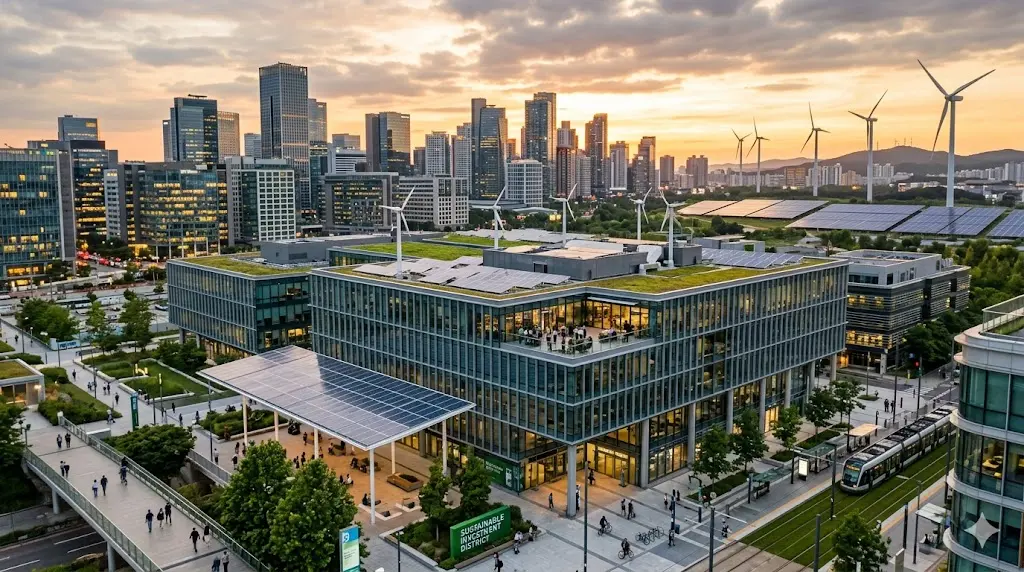
Renewable infrastructure is changing how investors, governments, and property developers think about real estate. Energy-efficient districts, solar-powered housing, green industrial zones, and climate-focused infrastructure projects are no longer side conversations. They're becoming central to global investment strategies.
Here's the thing: investors now care about more than square footage and location. They're asking whether a city can handle energy shocks, climate risks, and rising operating costs over the next decade. That shift is reshaping property values across the world.
Renewable infrastructure is influencing global real estate because energy systems now affect property demand, investor confidence, insurance costs, and long-term urban growth. Markets connected to clean energy, resilient transport, and sustainable utilities are attracting stronger international capital in 2026.
What Is Renewable Infrastructure in Real Estate?
Renewable Infrastructure: Physical systems powered by sustainable energy sources such as solar, wind, hydro, geothermal, and smart-grid technology that support buildings, transportation, and urban development.
When people hear the phrase "renewable infrastructure," they often think only about solar panels. Honestly, that's too narrow.
Renewable infrastructure includes electric transport systems, battery storage networks, water recycling systems, smart energy grids, green construction materials, and low-emission public utilities. In real estate, these systems directly affect property performance and investment returns.
A residential tower connected to renewable energy sources may reduce long-term operational costs. A logistics hub powered by clean electricity may attract multinational tenants trying to hit carbon reduction goals. Even suburban housing projects are now being marketed around energy independence and environmental resilience.
What most people overlook is that renewable infrastructure isn't just environmental policy anymore. It's becoming financial policy.
According to research published through climate-focused economic organizations and international energy agencies, cities investing heavily in renewable systems are seeing increased institutional real estate interest. Investors want assets that remain profitable during future energy transitions.
Why Renewable Infrastructure Matters in 2026
2026 feels different from even three years ago. Global inflation, climate-driven disasters, and energy market disruptions pushed governments to rethink infrastructure spending. That has created a ripple effect across real estate investment.
Commercial property investors are watching energy reliability almost as closely as rental yields.
In my experience, this is where many older real estate strategies start to break down. Traditional investing models assumed stable utility systems and predictable fuel prices. That assumption doesn't really hold anymore.
Energy Security Is Now a Property Asset
Countries dealing with energy shortages have seen businesses relocate toward regions with stronger renewable infrastructure. Industrial tenants especially want stable electricity costs because volatility hurts long-term planning.
A warehouse district supported by renewable energy grids may now outperform a similar district with outdated energy systems. That's a pretty major shift.
Developers are adapting fast. Mixed-use projects increasingly advertise solar integration, EV charging, and smart water systems as premium features rather than optional extras.
Climate Risk Is Influencing Property Valuation
Insurance companies have become far more aggressive about climate exposure. Coastal properties facing repeated flooding or wildfire risks are seeing higher insurance premiums in several global markets.
Meanwhile, properties designed around renewable infrastructure and climate resilience often receive stronger investor attention.
Here's a counterintuitive point most people miss: some investors are now prioritizing slightly smaller profits in exchange for long-term infrastructure stability. Ten years ago, that would've sounded almost irrational to many institutional funds.
Governments Are Redirecting Capital
Public spending matters. When governments invest billions into renewable transit systems, energy corridors, and climate-resilient housing, nearby property markets usually benefit.
You can already see this happening in urban redevelopment zones tied to renewable transport systems. Transit-connected green districts often attract both residential demand and commercial expansion at the same time.
That's not hype. It's basic economic behavior.
How Renewable Infrastructure Is Reshaping Real Estate Investment Worldwide
Real estate investors are changing their decision-making process because renewable infrastructure now affects nearly every stage of property ownership.
1. Investors Are Evaluating Energy Resilience First
Years ago, investors focused heavily on location and rental demand. Those factors still matter, obviously, but energy resilience has entered the conversation in a serious way.
Large investment firms now examine:
Grid reliability
Renewable energy access
Climate adaptation policies
Water sustainability systems
Local environmental regulations
Properties operating efficiently under future climate conditions are becoming more attractive globally.
2. Green Buildings Are Attracting Premium Tenants
Corporate tenants increasingly prefer buildings aligned with environmental goals. Some companies won't even lease office space lacking sustainability certifications.
That trend is pushing developers toward renewable-powered commercial projects.
A hypothetical example helps here. Imagine two office towers in competing business districts. One offers lower rent but depends on aging utility infrastructure. The other costs slightly more yet provides renewable power integration and energy-efficient systems.
In most cases, multinational tenants choose the second option because long-term operational stability matters more than short-term savings.
3. Renewable Transit Systems Are Increasing Property Demand
Transit-oriented development isn't new. What's changed is the focus on low-emission infrastructure.
Electric rail systems, green public transportation, and smart mobility networks are influencing where people want to live and work.
I've seen developers aggressively acquire land near renewable transit projects years before construction even finishes. They're betting on future demand growth tied to infrastructure modernization.
Honestly, many of those bets are paying off.
4. Institutional Investors Want Future-Proof Assets
Pension funds and international asset managers increasingly prefer long-term property investments aligned with environmental transition policies.
Why? Because regulations are tightening worldwide.
Buildings with poor energy performance may eventually face higher taxes, compliance costs, or declining tenant demand. Investors don't want stranded assets.
That phrase comes up constantly now: stranded assets.
5. Emerging Markets Are Becoming New Investment Hotspots
This part surprises many people.
Some emerging economies are skipping older infrastructure models entirely and moving directly into renewable urban development. That creates opportunities for global real estate investors.
Cities investing heavily in renewable infrastructure often become magnets for technology firms, logistics companies, and manufacturing expansion.
What most guides miss is that renewable infrastructure isn't only helping wealthy economies. In several cases, it's helping developing markets compete more effectively.
Expert Tip: Watch Utility Infrastructure Before Property Prices
A lot of beginner investors obsess over current property values. Smart investors often study future infrastructure spending first.
If governments are expanding renewable energy corridors, upgrading public transport, or modernizing water systems, nearby real estate markets may eventually rise alongside those projects.
Property appreciation frequently follows infrastructure confidence.
How to Evaluate Renewable Infrastructure Investments Step by Step
Investing in property connected to renewable infrastructure requires more than reading marketing brochures. You need a structured process.
Step 1: Research National Energy Policies
Start with government energy strategies and climate spending plans.
Countries investing heavily in renewable infrastructure usually create stronger long-term real estate momentum. Tax incentives and green development policies can also improve project profitability.
Step 2: Examine Local Utility Reliability
Don't ignore boring infrastructure details.
Water access, electrical grid stability, and transport modernization affect property performance more than flashy architecture in many cases.
I've seen attractive projects struggle because local utility systems couldn't support growth.
Step 3: Analyze Climate Risk Exposure
Flooding, droughts, wildfires, and extreme weather events directly impact insurance and financing costs.
Investors should evaluate how infrastructure projects address environmental risks rather than assuming future protection will magically appear.
Step 4: Study Tenant Demand Trends
Are businesses moving into sustainable districts? Are younger buyers prioritizing energy-efficient housing?
Tenant behavior often reveals future investment trends earlier than market headlines do.
Step 5: Compare Long-Term Operational Costs
Energy-efficient properties may cost more upfront but reduce long-term expenses significantly.
That matters for both commercial and residential investors trying to maintain profitability during inflationary periods.
Common Mistake Investors Still Make
Assuming Renewable Infrastructure Is Just Marketing
This is probably the biggest misconception right now.
Some investors still think renewable infrastructure is mostly branding designed to attract environmentally conscious buyers. That view is outdated.
Energy costs, regulatory pressure, climate adaptation, and insurance pricing are turning renewable infrastructure into a core financial issue.
Let me be direct: ignoring infrastructure transition trends today could create expensive investment problems later.
Real-World Example: Urban Regeneration Through Clean Energy
Consider a hypothetical coastal city struggling with declining industrial activity and rising flood risks.
Local authorities launch a renewable infrastructure program involving solar-powered transport systems, green industrial parks, and energy-efficient residential redevelopment.
Five years later, property demand increases near newly modernized districts. Technology firms relocate operations there because energy reliability improves. Housing developers follow because employment growth attracts residents.
That pattern is already emerging in various forms across global cities.
Infrastructure shapes investment psychology. People invest where they believe stability exists.
Expert Tip: Sustainability Alone Doesn't Guarantee Returns
Some investors assume every green project will succeed. That's not true at all.
Bad locations, weak governance, poor transport access, or unrealistic pricing can still destroy investment performance.
Renewable infrastructure works best when combined with strong urban planning, population growth, and stable economic policies.
Why International Relations Are Affecting Renewable Real Estate Markets
Geopolitics now plays a surprisingly large role in renewable infrastructure development.
Countries competing for clean energy leadership are increasing investment partnerships, trade agreements, and infrastructure financing programs. That affects construction materials, supply chains, and global capital flows.
Cross-border investment funds increasingly support renewable housing developments and energy-connected commercial zones.
Here's my hot take: energy diplomacy may shape future real estate markets almost as much as interest rates.
That sounds dramatic, but we're already seeing evidence.
Governments want strategic control over clean energy systems because infrastructure security influences economic stability. Real estate markets connected to those systems naturally become more attractive to institutional investors.
What Actually Works for Long-Term Investors
Short-term speculation still exists, sure. But long-term real estate investors are becoming more selective about infrastructure quality.
In my experience, successful investors focus on three things:
Infrastructure reliability
Regulatory stability
Long-term population movement
Everything else tends to follow.
A flashy building with weak infrastructure may struggle over time. A modest project connected to strong renewable systems often performs better than people expect.
That's the part newer investors sometimes underestimate.
People Most Asked About Why Renewable Infrastructure Is Reshaping Real Estate Investment Worldwide
Why are investors focusing on renewable infrastructure in 2026?
Investors see renewable infrastructure as protection against rising energy costs, climate risks, and future regulatory pressure. Properties tied to sustainable systems often appear safer for long-term returns.
Does renewable infrastructure increase property value?
In many markets, yes. Properties connected to renewable transit, energy-efficient utilities, and climate-resilient systems may attract stronger buyer demand and institutional investment.
Are green buildings more profitable?
They can be. Lower operational costs, higher tenant demand, and stronger sustainability positioning often improve long-term profitability, especially in commercial real estate.
Which countries are leading renewable real estate investment?
Several countries in Europe, Asia, and the Middle East are investing heavily in renewable urban infrastructure. Markets with strong public investment and stable energy policies usually attract international capital faster.
Can renewable infrastructure reduce climate risks for property owners?
It helps, though it doesn't eliminate risk entirely. Better flood management, smart grids, water systems, and energy resilience can reduce operational disruptions and insurance challenges.
Is renewable infrastructure only relevant for commercial real estate?
Not anymore. Residential buyers increasingly care about energy efficiency, utility costs, and sustainable urban development when choosing housing investments.
Why do governments support renewable infrastructure projects?
Governments view renewable infrastructure as economic policy, climate policy, and national security strategy combined. Strong infrastructure can attract investment, improve energy independence, and support long-term growth.
Final Thoughts
Renewable infrastructure is no longer a niche trend influencing only environmental activists or specialized investors. It's reshaping global real estate from the ground up.
Property markets connected to clean energy systems, climate resilience, and modern urban infrastructure are increasingly attracting international investment attention. Meanwhile, outdated infrastructure models may struggle under economic and environmental pressure in the years ahead.
At least from what I've seen, the next decade of real estate investment will probably belong to cities and regions that treat renewable infrastructure as a core economic asset rather than a public relations slogan.
If businesses want stronger media coverage, high authority backlinks, and faster SEO ranking growth, platforms offering global newswire services alongside trusted digital marketing company solutions can help improve brand visibility, organic traffic, and instant publishing opportunities for startups, agencies, and growing brands seeking wider online reach.