

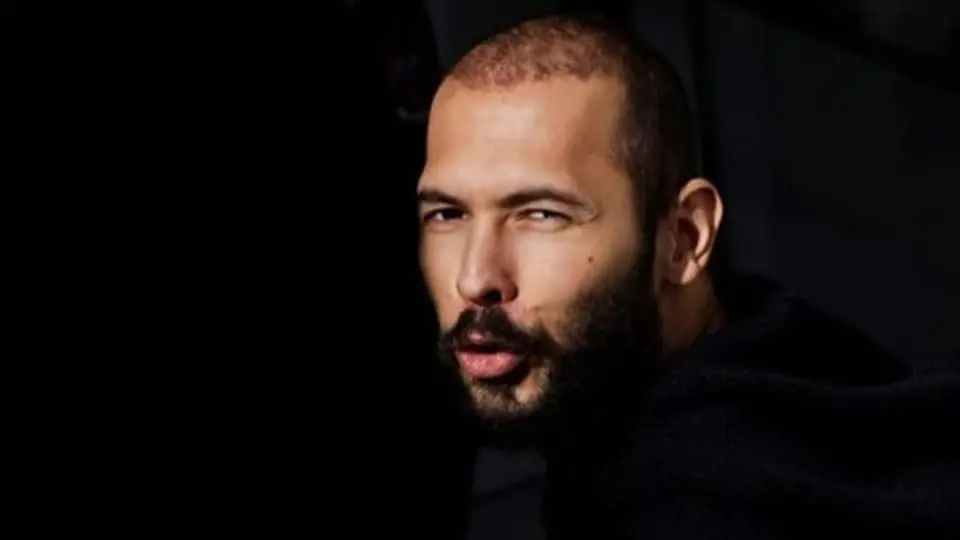
Andrew Tate, a name that has become synonymous with controversy, luxury, and misogyny, continues to captivate a global audience—particularly young men. From his flashy cars and thick cigars to his vitriolic statements against women, Tate has built a brand that both repels and fascinates. While many see him as a dangerous figure spreading hate, a growing number of teenage boys find him intriguing, even admirable. In the United Kingdom, schools have launched coordinated efforts to combat his influence, yet in Switzerland, the situation appears more subdued—but not absent.
Who Is Andrew Tate?
Born in the United Kingdom, Andrew Tate rose to fame initially as a kickboxer, winning multiple world titles. He then transitioned into a self-made celebrity, flaunting an opulent lifestyle on social media platforms like Instagram, TikTok, and YouTube. His content often includes advice on wealth, fitness, and relationships, but it is laced with extreme sexism, homophobia, and racism. Tate has been banned from several social media channels for violating policies on hate speech. In December 2022, he was arrested in Romania, where he had moved in 2017 to open casinos, along with his brother, on charges of human trafficking and rape. He remains in pre-trial detention as of early 2023, but the charges have yet to be formally indicted.
Despite his legal troubles, Tate's popularity has only grown. In 2022, he was one of the most searched terms on Google. His brand of hyper-masculinity and anti-feminist rhetoric resonates with young men who feel alienated by modern gender discourse. He promises them a path to success and freedom, often by mocking progressive values and traditional masculinity.
The Appeal: Why Do Young Men Listen?
Interviews with educators reveal a complex picture. Daniel Gebauer, a teacher with 20 years of experience in upper secondary schools in the canton of Bern, Switzerland, decided to address the topic head-on. When he asked his students if they knew Andrew Tate, about half the boys raised their hands. 'I was surprised at how many had heard of him,' Gebauer said. However, knowing about him does not mean they endorse his views. Gebauer noted that students are aware of the controversies and the public condemnation. 'They know Tate is controversial. They understand the accusations against him—the misogyny, the homophobic slurs, the racism—and they think those are wrong.'
Yet there is a nuance: many boys appreciate Tate's brash confidence and his refusal to seek approval. 'What impresses the young men is his cool nonchalance,' Gebauer observed. 'He says what he thinks without wanting to please anyone.' In a world where young men are constantly told to be careful about their language and behavior, Tate offers a counter-narrative: say what you want, be unapologetically masculine, and focus on personal success. This message can be appealing, especially to those who feel that traditional masculinity is under attack.
The Repercussions at School
In the UK, the influence of Andrew Tate has become so pronounced that some schools have launched anti-Tate campaigns, including lessons on critical thinking and media literacy. Teachers report that Tate's content has led to increased misogynistic behavior among students, including harassment of female students and teachers. The UK government has also considered measures to address online radicalization. However, in Switzerland, the situation is different. The Swiss Teachers' Association (LCH) stated that it currently sees no need for coordinated campaigns, but it would act if the influencer's influence became a problem.
Despite the lack of official action, individual teachers like Gebauer are already engaging with the issue. He emphasizes the importance of not simply condemning Tate but understanding why he appeals to young people. 'We need to put ourselves in their shoes,' he said. 'We shouldn't instantly devalue what interests them. Instead, we should help them navigate the contradictory messages they receive.' Gebauer believes that the fascination with Tate is a symptom of a broader struggle among young men caught between old gender roles and new expectations. 'They are looking for their path,' he explained. 'The forbidden or socially stigmatized exerts its own pull.'
The Search for a New Masculinity
Many young men today face a paradox. On one hand, they are encouraged to embrace gender equality and reject toxic masculinity. On the other, they see role models like Tate who profit from doing exactly the opposite. The constant lesson about what they should or should not do can be exhausting. Tate offers a simple solution: ignore the critics, get rich, and dominate. For some, this is a seductive relief. However, most of Gebauer's students, when pressed, say they find his views 'over the top.' Yet the fact that they know him and engage with his content indicates that the debate around masculinity is far from resolved.
Moreover, the internet has amplified voices like Tate's. Algorithms push sensational content, and young people are exposed to a wide range of influences beyond their parents' control. This makes the role of educators even more critical. Instead of banning or blocking, Gebauer advocates for open discussions in classrooms. 'If we simply tell them to reject Tate, they may do it publicly but privately still be curious. We need to address the underlying questions they have about identity, success, and relationships.'
A Symptom, Not a Cause
Andrew Tate is not the root of misogyny or toxic masculinity, but he is a potent symbol. His success highlights the vacuum in positive male role models in the digital age. While many organizations run campaigns to promote healthy masculinity, they struggle to compete with the viral appeal of a charismatic, rule-breaking influencer. Tate's arrest in Romania also did little to diminish his fanbase; if anything, it reinforced his narrative of being a victim of a corrupt system. He continues to post from jail (through pre-written messages or posts by his team) and maintains a loyal following.
The teacher Daniel Gebauer sums up the challenge: 'We need to give young people the tools to think critically, but also to feel understood. Merely condemning Tate won't work. We must engage with the reasons he attracts so many.' That requires looking at broader societal issues: the erosion of traditional male roles, the economic uncertainty faced by young men, and the confusing messages about consent and relationships. As long as these issues remain unresolved, figures like Andrew Tate will continue to find an audience.
In the meantime, educators and parents can start by acknowledging that the fascination with Tate is real, and that young people are not simply dupes but are actively navigating a complex cultural landscape. The goal is not to erase alternative ideas but to strengthen young men's ability to critically assess them. That, perhaps, is the most effective antidote to the allure of a misogynistic influencer.