

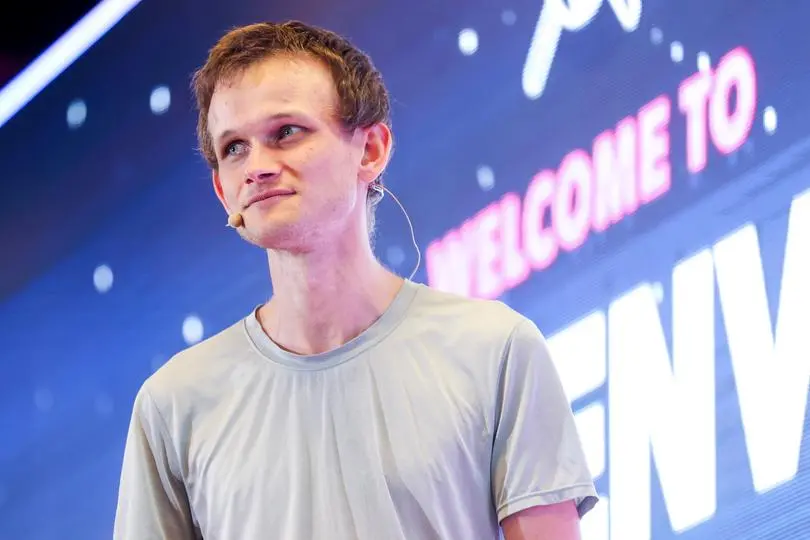
Ethereum co-founder Vitalik Buterin has published a new blog post arguing that artificial intelligence (AI) combined with a rigorous software verification technique known as formal verification could become one of the most important tools for cybersecurity in the cryptocurrency industry. The post, released on May 18, 2026, comes amid growing concerns that AI itself is accelerating the frequency and sophistication of cyberattacks, making traditional bug-hunting and vulnerability detection methods inadequate for future threats.
What is formal verification?
Formal verification is a technique that uses mathematical reasoning to prove that a software program behaves exactly as intended for all possible inputs, leaving no edge cases for bugs or exploits. Unlike traditional testing, which can only check a finite number of scenarios, formal verification provides a machine-checkable guarantee of correctness. It has been used for decades in safety-critical systems such as aircraft avionics, nuclear reactor controls, and cryptographic protocols. In the cryptocurrency space, it has already been applied to smart contract languages like Viper and to parts of the Ethereum execution client.
Buterin argues that while formal verification is powerful, it is also extremely expensive and time-consuming to write the necessary mathematical proofs manually. This is where AI can step in. By leveraging large language models and other machine learning techniques, developers could automatically generate or assist in writing formal specifications and proofs, drastically reducing the cost and effort required to verify complex software.
The AI threat to crypto security
Buterin’s blog post is partly motivated by the rapid advances in AI capabilities, particularly generative AI models that can write code quickly. While these models can boost developer productivity, they also lower the barrier for malicious actors to create sophisticated exploits. AI-generated code may contain hidden vulnerabilities that are harder for human reviewers to spot, and AI systems themselves can be used to probe blockchain protocols for weak points at a pace no human team can match.
Several recent incidents have highlighted the growing AI threat. In early 2026, a group of researchers demonstrated an AI tool that could automatically identify reentrancy vulnerabilities in Solidity smart contracts with 90% accuracy, enabling rapid exploitation. Another case involved an AI-generated phishing campaign that successfully tricked users of a popular DeFi platform into revealing private keys. These developments have pushed the crypto industry to rethink its security posture.
Buterin suggests that the solution lies not in fighting AI with more humans, but in using AI to counteract AI. “If the attackers have AI, the defenders must have AI too,” he writes, “and formal verification is one area where AI can provide an asymmetric advantage to the good guys.”
Buterin’s vision for AI-assisted verification
In his post, Buterin outlines a future where AI systems act as “copilots” for developers, automatically suggesting formal specifications based on natural language descriptions of intended behavior. The human developer reviews and approves these specifications, then the AI helps prove them by generating step-by-step mathematical derivations that can be checked by existing theorem provers such as Coq or Lean.
“Imagine a world where every smart contract is verified before deployment, where AI-generated proofs ensure no reentrancy bugs, no integer overflows, no governance attacks,” Buterin writes. “This is not science fiction. We already have the building blocks: formal verification for small programs, theorem provers, and AI that can reason about code. The challenge is scaling these methods to the size of an entire blockchain application.”
The Ethereum co-founder points to several ongoing projects in this direction. One is the “KEVM” project, which formalizes the Ethereum Virtual Machine (EVM) semantics in the K framework, enabling proofs about EVM bytecode. Another is the “Certora Prover,” which has been used to verify high-profile DeFi protocols like Uniswap and Aave. Buterin argues that integrating AI into these tools could increase their coverage and reduce the manual labor currently required.
Broader implications for the crypto ecosystem
If AI-assisted formal verification becomes mainstream, it could have far-reaching consequences beyond just smart contracts. Buterin notes that many of the foundations of crypto, including cryptographic curve implementations, hash functions, consensus algorithms, and even the Ethereum beacon chain, could benefit from mathematically proven correctness. “Every layer of the stack should be formally verified,” he says, “from the L1 protocol down to the wallet code.”
This vision aligns with the broader trend of “verifiable computing” in the blockchain space. Zero-knowledge proofs (ZKPs) are already used to mathematically prove that computations are correct without revealing the underlying data. Formal verification takes this a step further by proving that the code itself is correct, not just that a particular execution is valid. Both techniques together could create what Buterin calls “an ironclad foundation for decentralized trust.”
However, there are skeptics. Some developers argue that formal verification is too expensive and impractical for the fast iterative development cycles common in DeFi. Others worry that relying on AI proofs could introduce new failure modes, such as AI systems that generate plausible-looking but incorrect proofs. Buterin acknowledges these concerns but believes they can be mitigated through careful design, human oversight, and gradual adoption starting with the most critical infrastructure.
Historical context: Buterin’s long-standing interest in formal methods
This is not the first time Buterin has championed formal verification. As early as 2015, he wrote about the importance of verifying smart contracts, and in 2020 he collaborated with researchers on a paper titled “Formal Verification of Smart Contracts: A Survey.” The Ethereum Foundation has also funded multiple grants for formal verification tools and education.
Buterin’s academic background includes studies in computer science and economics, and he has frequently emphasized the need for mathematical rigor in blockchain systems. His latest push for AI-assisted verification represents a convergence of two of his long-term interests: making Ethereum more secure and exploring the potential of AI.
In 2024, Buterin co-authored a proposal to integrate a proof-checking mechanism directly into the Ethereum protocol, allowing nodes to verify that certain critical contracts have been proven correct. While that proposal did not gain full adoption, it laid the groundwork for the current conversation around AI and formal methods.
Industry reactions and complementary developments
The crypto security community has reacted positively but cautiously to Buterin’s blog post. “Vitalik is right that we need to automate verification,” said Sophia Martinez, a security researcher at a leading blockchain audit firm. “But we also need to ensure the AI itself is trustworthy. There’s a bootstrapping problem: how do you verify the AI that verifies your code?”
Several startups are already working on this problem. One company, VeriAI, recently raised $50 million to develop an AI-powered formal verification engine specifically for Solana and Ethereum. Another project, ProofGPT, claims to have achieved a 70% reduction in the time needed to write formal specifications for DeFi protocols.
On the same day as Buterin’s post, a separate news story highlighted how AI is accelerating the quantum computing threat to crypto. Researchers warned that AI could shorten the timeline for breaking current cryptographic primitives, making quantum-resistant upgrades even more urgent. Buterin acknowledges this synergy: “AI helps both sides in the quantum arms race, but formal verification will be essential to ensure that new post-quantum cryptosystems are implemented correctly.”
Practical examples of AI-assisted verification today
To make his argument concrete, Buterin provides several examples in his blog post of how AI can already be used in formal verification workflows. One example involves rewriting a simple ERC-20 token contract into a formal specification using a tool called “Codewalker,” which uses an LLM to infer intended invariants from test cases. The AI-generated specification is then checked against a model of the EVM using the “Isabelle” theorem prover.
Another example demonstrates how AI can find errors in existing formally verified code. An AI model trained on failed proofs successfully identified a subtle bug in a verified multi-signature wallet that had passed all traditional audits. “The bug was in the interaction between two previously assumed-safe components,” Buterin explains. “Formal verification of each component separately had missed it, but an AI analyzing the composition found the flaw.”
These examples illustrate Buterin’s broader point: AI is not a replacement for human expertise, but a force multiplier that can help humans find and fix bugs faster, more comprehensively, and with greater mathematical certainty.
Challenges and the road ahead
Despite the promise, significant hurdles remain. One major issue is the trade-off between expressiveness and verifiability. For a programming language to be easily formally verified, it must restrict certain features that make it harder to reason about mathematically. However, many blockchain developers prefer flexible, Turing-complete languages like Solidity, which are notoriously difficult to verify for complex smart contracts.
Buterin suggests that the solution could be a hybrid approach: use a restricted language for critical components and a more flexible language for the rest, with AI helping to generate verification proofs across the boundary. He also notes that the development of AI-native formal methods, where the AI itself is trained to generate rigorous proofs, is still in its infancy and requires more research.
Funding is another concern. Formal verification tools have historically struggled to gain widespread adoption because they are expensive to build and maintain. Buterin calls on the crypto community to invest in shared infrastructure—open-source theorem provers, proof libraries, and AI training datasets—so that the benefits can accrue to the entire ecosystem rather than being locked in proprietary tools.
Finally, there is the question of trust in AI-generated proofs. If an AI produces a proof that passes a checker, can we be sure the proof is sound? Buterin argues that as long as the proof checker itself is a small, well-audited piece of software (like the Lean kernel), trust can be placed in the checking process rather than in the AI that generated the proof. “The AI can be wrong, but the proof checker catches it,” he writes. “That’s the beauty of formal verification.”
As the crypto industry continues to mature, the pressure to improve security grows ever stronger. With billions of dollars locked in DeFi protocols and an increasing number of high-profile exploits, the need for mathematically rigorous defenses has never been greater. Vitalik Buterin’s advocacy for AI-assisted formal verification may represent a turning point, pushing the entire ecosystem toward a future where bugs are no longer inevitable but are instead systematically eliminated before they can harm users.
Source: Coindesk News