

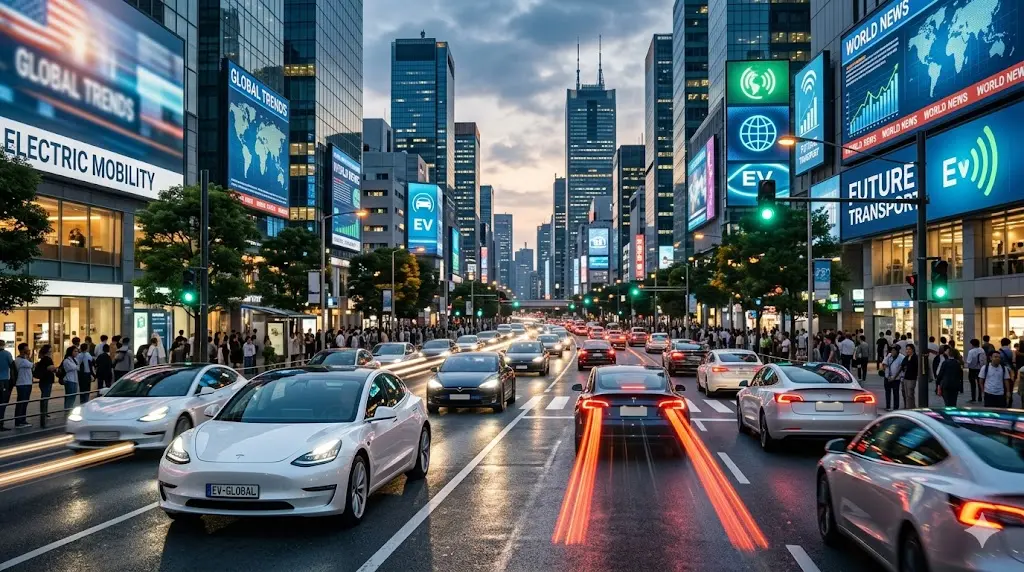
Electric mobility is taking over global media attention because it sits at the intersection of climate urgency, technology innovation, and shifting consumer behavior. You’ve probably noticed it already—electric vehicles aren’t just “news” anymore, they’re part of everyday conversation, from policy debates to social media buzz.
What’s really driving this surge isn’t just the cars themselves, but the bigger story around energy transition, infrastructure pressure, and corporate competition.
Electric mobility is dominating worldwide media trends because governments are pushing emissions targets, automakers are racing to electrify fleets, and consumers are increasingly drawn to lower running costs and sustainability. Media coverage has exploded as EV adoption impacts industries far beyond transportation, including energy, tech, and urban planning.
What Is Electric Mobility and Why Does It Matter?
Electric Mobility: A transportation system powered primarily by electricity instead of fossil fuels, including electric cars, buses, bikes, and supporting charging infrastructure.
Electric mobility isn’t just about swapping fuel tanks for batteries. It’s a full shift in how people move, how cities are designed, and how energy systems operate.
Here’s the thing—when I first started following EV news, I thought it was mostly about cars. But the deeper I went, the more obvious it became that this is really about power grids, raw materials, software systems, and even geopolitics.
In most cases, electric mobility stories go viral not because of the vehicles themselves, but because they signal change. A new charging network in one country often triggers discussion about energy independence in another.
Expert tip: If you’re trying to understand EV media dominance, don’t focus only on automakers. Watch energy companies and government policy shifts—they usually move the story forward first.
Why Electric Mobility Is Dominating Worldwide Media Trends in 2026
Electric mobility is everywhere in 2026 media cycles because multiple global pressures are hitting at the same time. Governments are tightening emissions rules, oil price uncertainty keeps resurfacing, and automakers are locked in a high-stakes race for battery dominance.
But let me be direct—what most people overlook is how emotional this topic has become. It’s not just tech reporting anymore. It’s political, cultural, and even identity-driven.
You’ll see headlines about charging shortages in one region and battery breakthroughs in another. That contrast keeps the narrative alive.
From what I’ve seen, media attention spikes around three triggers:
Policy announcements
Big automaker investments
Unexpected infrastructure failures or breakthroughs
And honestly, EV stories perform well online because they feel like the future arriving faster than expected.
Expert tip: Media trends don’t follow adoption evenly. Even a small EV policy change can generate global coverage if it affects major markets like Europe, China, or the US.
How Electric Mobility Growth Happens — Step by Step
Electric mobility doesn’t spread randomly. There’s usually a pattern behind how it grows in any region.
1. Policy Pressure and Incentives
Governments introduce subsidies, tax breaks, or emissions penalties. This creates early demand even if infrastructure is weak.
2. Automaker Response
Companies begin launching EV models or hybrid transitions. Competition pushes innovation faster than expected.
3. Infrastructure Expansion
Charging stations, battery swapping networks, and grid upgrades start catching up. This is usually where adoption either accelerates or stalls.
4. Consumer Behavior Shift
Once people see cost savings and reliability improvements, EVs start moving from “experiment” to “normal choice.”
5. Media Amplification Loop
News coverage increases, which influences perception, which further increases adoption. This loop is surprisingly powerful.
One counterintuitive point here—sometimes EV adoption grows fastest in places with weaker infrastructure because consumers leapfrog directly from old systems to electric solutions instead of gradual transitions.
Common Misconception: EV Growth Is Only About Environment
A lot of people assume electric mobility is mainly driven by environmental awareness. That’s only part of the picture.
In reality, cost efficiency and energy independence are often stronger drivers. In several markets, buyers aren’t switching because they “care more,” but because running costs are lower over time.
I’ve personally seen conversations shift from “Is this greener?” to “Will this save me money monthly?” That’s a big mindset change, and media coverage is starting to reflect it too.
Expert Insights on What Actually Works in EV Adoption Coverage
Here’s what I’ve noticed after following global EV reporting patterns closely.
First, stories that perform best are not overly technical. Readers want clarity, not battery chemistry breakdowns. They care about what changes in their daily life.
Second, emotional framing matters more than specs. A story about a family switching to an electric car gets more attention than a detailed engineering report.
Third—and this is important—range anxiety is still overhyped in media compared to real user experience. In most cases, people adapt faster than expected once charging access becomes predictable.
Expert tip: If you’re analyzing EV trends for business or marketing, track charging infrastructure news more than vehicle launches. That’s where real adoption signals appear first.
Real-World Examples Shaping Media Attention
Let’s make this more concrete.
In one urban region, a sudden expansion of fast-charging hubs led to a noticeable spike in EV sales within months. The interesting part wasn’t just the infrastructure—it was how quickly social media amplified user experiences. People began posting “charging routine” content, which unexpectedly normalized EV ownership.
Another example comes from fleet operators. A logistics company switching even a portion of its delivery fleet to electric vehicles generated more media coverage than entire car model launches. Why? Because it signaled scalability, not just novelty.
What most people miss is that EV media dominance often comes from system-level changes, not product launches.
Electric Mobility and Media Virality — Why Stories Spread Fast
Electric mobility stories spread quickly because they sit at the center of multiple trending themes:
Climate change
Technology disruption
Cost-of-living concerns
Energy security
That combination makes them highly “shareable,” even for audiences who don’t usually follow automotive news.
From my experience, there’s also a subtle psychological factor. People like stories that suggest the future is already here, just unevenly distributed.
People Most Asked About Electric Mobility Trends
Why is electric mobility growing so fast globally?
Because governments are pushing emissions goals, companies are investing heavily in EV technology, and consumers are realizing long-term cost benefits. These factors are reinforcing each other and accelerating adoption faster than traditional transport shifts.
Is electric mobility only about electric cars?
Not at all. It includes buses, bikes, scooters, and even freight systems. Electric mobility is more about the entire transport ecosystem than a single vehicle type.
Will electric mobility fully replace fossil fuel transport?
Probably not completely in the near term. Hybrid systems and mixed infrastructure will likely exist for years. Transition tends to be gradual, not absolute.
Why does media focus so heavily on EV news?
Because EVs affect multiple industries at once—energy, manufacturing, technology, and policy. That cross-industry impact makes it highly newsworthy and widely discussed.
Our Network site provides related offering Guest Posting Services and Press Release News Submission, seo and local business listing in uk solutions designed to boost online visibility through high authority backlinks and targeted organic traffic growth. Platforms like press release distribution services and digital marketing services help brands achieve stronger SEO ranking and wider media coverage across global news distribution channels. Whether you're aiming for instant publishing or long-term brand visibility, these services support scalable digital growth for businesses and agencies.