

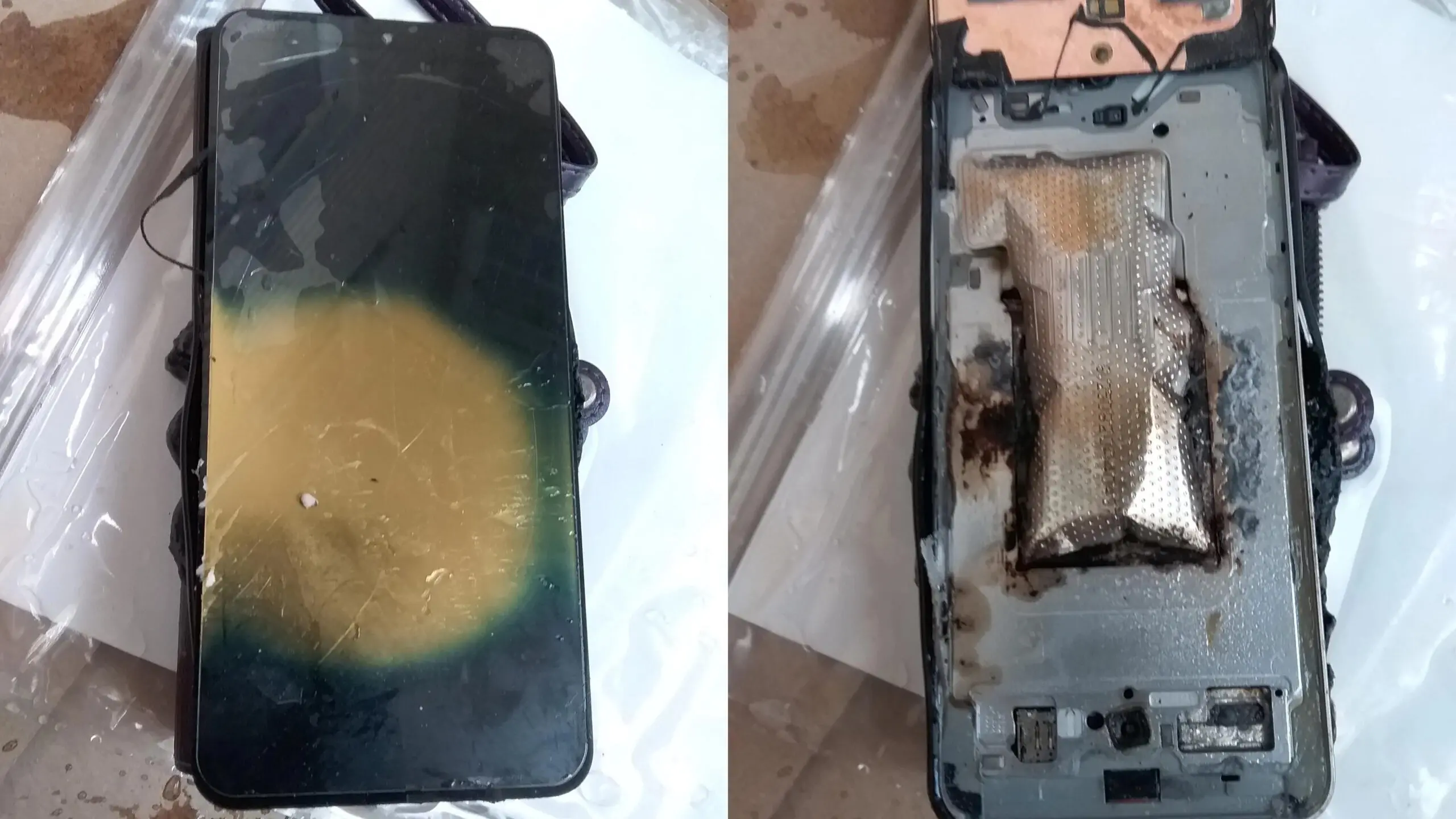
A Reddit user in Canada has reported that their Samsung Galaxy S25 FE exploded while charging overnight, causing minor burns to the user and traumatizing their child. The incident adds to a growing list of battery fires involving Samsung’s flagship phones this year, following earlier reports of a Galaxy S25 Plus explosion and a Galaxy S24 catching fire during regular use.
According to the user, the phone was charging on a mattress in the bedroom where they and their son were sleeping. The device was connected to the original in-box USB-C cable but was paired with a third-party 20W USB-PD charger, as Samsung no longer includes a power adapter in the box. The phone was enclosed in a thick leather wallet case that also contained coins, which may have contributed to heat retention and eventual thermal runaway.
The user stated they were awakened by popping sounds and saw metal and plastic shrapnel flying from the phone. The fire department responded, extinguishing smoke and handling the device. The user sustained a small burn on their neck and singed hair, and their son was emotionally traumatized by the event. Smoke and property damage were reported, along with a persistent odor in the room. The phone was purchased new from Virgin Mobile in Canada about six months ago, and the user is still paying monthly installments.
Background: Samsung’s Battery Safety History
Samsung has faced significant battery-related controversies in the past, most notably the Galaxy Note 7 recall in 2016, when defective batteries caused widespread fires and explosions. That incident cost Samsung billions and led to rigorous internal safety protocols, including an eight-point battery safety check. Despite these measures, isolated incidents of overheating and fires have continued in later models, including the Galaxy S21, S22, S23, and now the Galaxy S25 series.
In early 2025, a Galaxy S25 Plus reportedly exploded while charging in a different incident. Several months later, a Galaxy S24 caught fire while being held, forcing the user to drop the phone. Samsung issued a statement for the first incident but did not publicly respond to the second. The company has been contacted about this latest case but has not yet provided an update.
Factors That Can Lead to Battery Fires
Lithium-ion batteries, while generally safe, are susceptible to thermal runaway under certain conditions. Common triggers include physical damage, manufacturing defects, overcharging, exposure to high temperatures, and blocked heat dissipation. In this case, the thick wallet case may have prevented heat from escaping, and the coins inside could have caused pressure points or short circuits. Even though modern smartphones have multiple safeguards—such as temperature sensors, current limiters, and automatic shutdown when overheating—these protections are not foolproof if the battery is already compromised.
Third-party chargers are another variable. While many reputable third-party brands meet safety standards, uncertified or counterfeit chargers may lack proper voltage regulation, leading to excessive current flow and heat buildup. Samsung recommends using only official or certified accessories, but many users opt for cheaper alternatives.
Previous Galaxy S Series Incidents in 2025
The three incidents this year involve different models but share common themes: charging overnight, use of non-official chargers, and cases that restrict airflow. In the Galaxy S25 Plus case, the user reported that the phone was on a nightstand and began smoking. In the Galaxy S24 case, the phone spontaneously caught fire during normal use without any external factors. While the total number of reports remains extremely low compared to the millions of Galaxy phones sold, each incident raises concerns about battery consistency across the lineup.
Samsung has yet to issue a global safety bulletin or recall related to the Galaxy S25 series. The company typically investigates each incident individually and may offer replacement or compensation to affected users. In previous years, similar reports have not led to widespread recalls unless a pattern of defects is confirmed.
Safe Charging Practices for Smartphone Users
To minimize the risk of battery fires, experts recommend the following precautions:
- Use the original charger and cable that came with the phone, or purchase certified alternatives from reputable manufacturers.
- Avoid charging the phone on soft surfaces like beds, couches, or pillows, which can trap heat. Ideally, place the phone on a hard, flat surface in a well-ventilated area.
- Remove thick cases during charging, especially if the phone is known to get hot. Wallet cases and heavy-duty protective cases can significantly reduce heat dissipation.
- Do not expose the phone to direct sunlight or high temperatures while charging.
- Monitor the phone’s temperature during charging. If it becomes uncomfortably hot to touch, unplug it and let it cool down.
- Avoid covering the phone with blankets or placing it under pillows.
- Replace the battery if it shows signs of swelling, rapid draining, or physical damage.
What to Do If a Phone Catches Fire
If a lithium-ion battery catches fire, immediate action is critical:
- Evacuate people from the area and ensure no one inhales toxic fumes.
- Do not touch the burning phone with bare hands; use gloves or tools if necessary.
- Call emergency services and let professionals handle the fire. Lithium-ion batteries can reignite or explode.
- If you must attempt to extinguish the fire, use a Class D fire extinguisher or plenty of water, but be aware that water can cause short circuits and should be used with caution. For small fires, a fire blanket or sand can smother the flames.
- Open windows to ventilate smoke and toxic gases.
- Do not move the phone until it has completely cooled.
Broader Implications for the Smartphone Industry
Battery fires remain a rare but serious risk for all smartphone manufacturers. While advancements in battery chemistry and safety mechanisms have reduced incidents, the push for faster charging, slimmer designs, and higher capacity can sometimes compromise safety. Regulatory bodies like the UN’s transport regulations and UL certification standards aim to ensure battery safety, but end-user behavior plays a crucial role. Incidents like these serve as reminders that even flagship devices require proper handling to avoid dangerous failures.
Samsung’s silence on this third incident may indicate that the company is waiting for the results of its investigation. In the past, the company has taken swift action when a manufacturing defect is identified. However, if no defect is found, the case may be attributed to external factors. The user in this incident has confirmed that they contacted Samsung support and received a ticket number, but no further communication has occurred as of the report.
For now, Galaxy S25 FE owners should not panic, but they should review their charging practices and consider using official accessories and open cases during charging. Battery safety is a shared responsibility between manufacturers and users, and staying informed is the best defense against rare but potentially devastating incidents.
Source: Android Authority News