

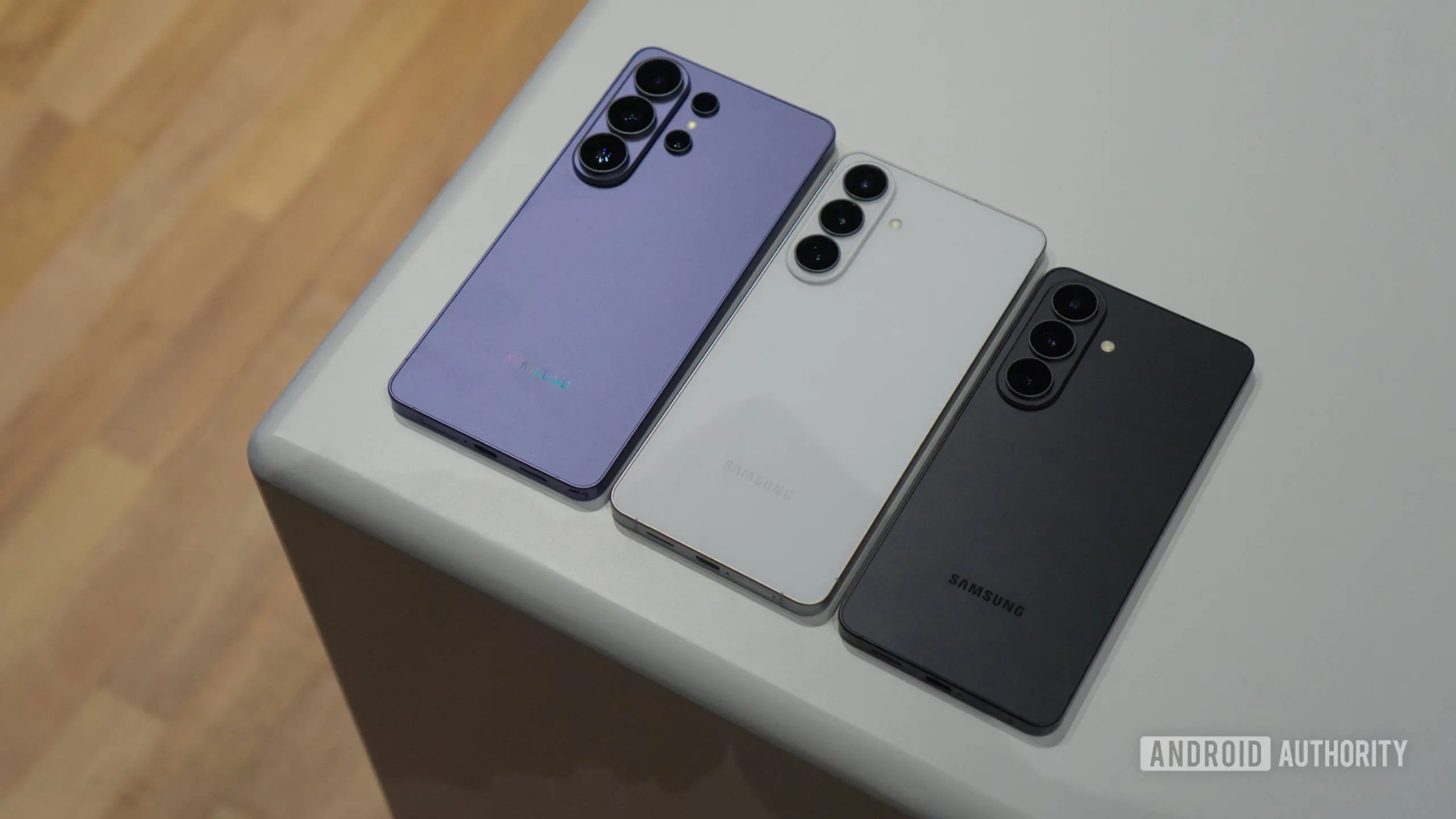
Mobile industry analysts have been tracking a troubling trend for consumers: the cost of flagship smartphones is steadily climbing, and Samsung appears to be leading the charge. According to a report from Greek tech outlet TechManiacs, Samsung will increase prices on a wide range of its premium and mid-range flagship phones starting in the first week of June 2026. The price hikes are expected to apply to the Galaxy S26 series, the upcoming Galaxy Z Fold 7 and Z Flip 7, as well as the Galaxy FE (Fan Edition) lineup. This news comes on the heels of earlier price increases for the Galaxy S26 series in various markets, raising concerns about the affordability of Samsung's best devices.
The price hike details
The report indicates that all affected Galaxy phones will cost at least €100 more—roughly $116 at current exchange rates. However, variants with higher storage capacities could see even steeper increases. For context, the Galaxy S26 series already saw price bumps of €50 to €80 ($58 to $93) for base storage models earlier this year. This new round of increases would compound those, making the entry-level S26 even more expensive. The Galaxy Z Fold 7 and Z Flip 7, expected to launch later this summer, will also carry higher price tags from day one, potentially deterring early adopters.
The Galaxy FE line, traditionally positioned as a more affordable entry point into the flagship ecosystem, is not spared. The Galaxy S25 FE—which is likely to remain on the market alongside the S26 series—will also see a price increase. This undermines the very purpose of the FE lineup, which was originally conceived as a 'flagship killer' at a lower price point. Now, even those seeking value will have to pay a premium.
Why are prices rising?
The root cause, as highlighted by Samsung and other industry players, is the soaring cost of high-bandwidth memory (HBM) and NAND flash storage. The explosive growth of artificial intelligence (AI) and machine learning applications has driven a massive demand for RAM and storage. Companies like NVIDIA, AMD, and hyperscalers are buying up huge quantities of HBM for AI training and inference, leaving less supply for the smartphone market. This supply crunch—often referred to as the 'RAM crisis'—has forced handset makers to pay more for components, and those costs are being passed on to consumers.
Additionally, mobile processors are becoming more complex and expensive to manufacture. Samsung's own Exynos and Qualcomm's Snapdragon chips have both seen price increases due to advanced node costs and integrated AI engines. The Galaxy S26 series, for instance, uses the Snapdragon 8 Gen 4 or Exynos 2600 depending on the region, both of which are built on cutting-edge 3nm or 4nm processes. These fabrication technologies are not cheap, and the R&D costs for integrated neural processing units (NPUs) add to the bill of materials.
Impact on Europe and the US
While the immediate price increases are confined to Greece, industry observers believe this is a bellwether for the rest of Europe. Samsung typically uses smaller markets to test pricing strategies before rolling them out more broadly. If the Greek hike is successful—meaning sales don't drop too sharply—similar increases could land in Germany, France, the UK, and other major European markets within weeks. For the US, the situation is already concerning. Samsung raised Galaxy S26 series prices in the US by $40 to $100 for base models, with even bigger jumps for higher storage tiers. A second round of increases could push the Galaxy S26 Ultra well past $1,600, making it one of the most expensive mainstream smartphones ever sold.
Interestingly, the price hikes come ahead of Samsung's next Unpacked event, which is rumored to take place on July 22, 2026. At this event, the company is expected to unveil the Galaxy Z Fold 8 (possibly called the 'Wide Fold') and the Galaxy Z Flip 8, as well as a potential Galaxy Z Fold 8 Ultra model. If the pattern holds, these new foldables will debut with elevated prices, even before considering the June increases on existing devices. Early adopters may face a tough choice: pre-order at a high price or wait for possible discounts later in the year.
A broader industry trend
Samsung is not alone in raising prices. OPPO, OnePlus, vivo, and Xiaomi have all implemented similar hikes in various markets in 2026, citing the same RAM crisis. This marks a reversal from the trend in 2024-2025, when smartphone prices were relatively stable or even declining in some categories due to fierce competition. Now, the AI boom is creating inflation across the entire supply chain. Even Apple is rumored to be considering a price bump for the iPhone 18 Pro models later this year. The era of bargain flagship phones may be over, at least until the supply of memory components catches up with demand.
For consumers, the advice is clear: if you are planning to buy a Samsung flagship—whether it's a Galaxy S26, a foldable, or an FE model—you might want to act quickly. Waiting could mean paying significantly more in the coming months. However, analysts caution that buying now might only delay the inevitable, as future generations will likely incorporate even more AI-driven features requiring larger RAM and storage, pushing prices even higher.
Ultimately, the smartphone industry is at a crossroads. The push towards on-device AI, as championed by Galaxy AI and similar initiatives, requires powerful hardware that costs more to produce. Samsung's price hikes are a direct reflection of this new reality. While the company continues to offer trade-in deals and carrier subsidies, the baseline cost of owning a top-tier smartphone is climbing. Whether consumers will accept these higher prices or shift to more affordable alternatives remains to be seen. One thing is certain: the days of ever-decreasing prices for premium phones are firmly behind us.
Source: Android Authority News