

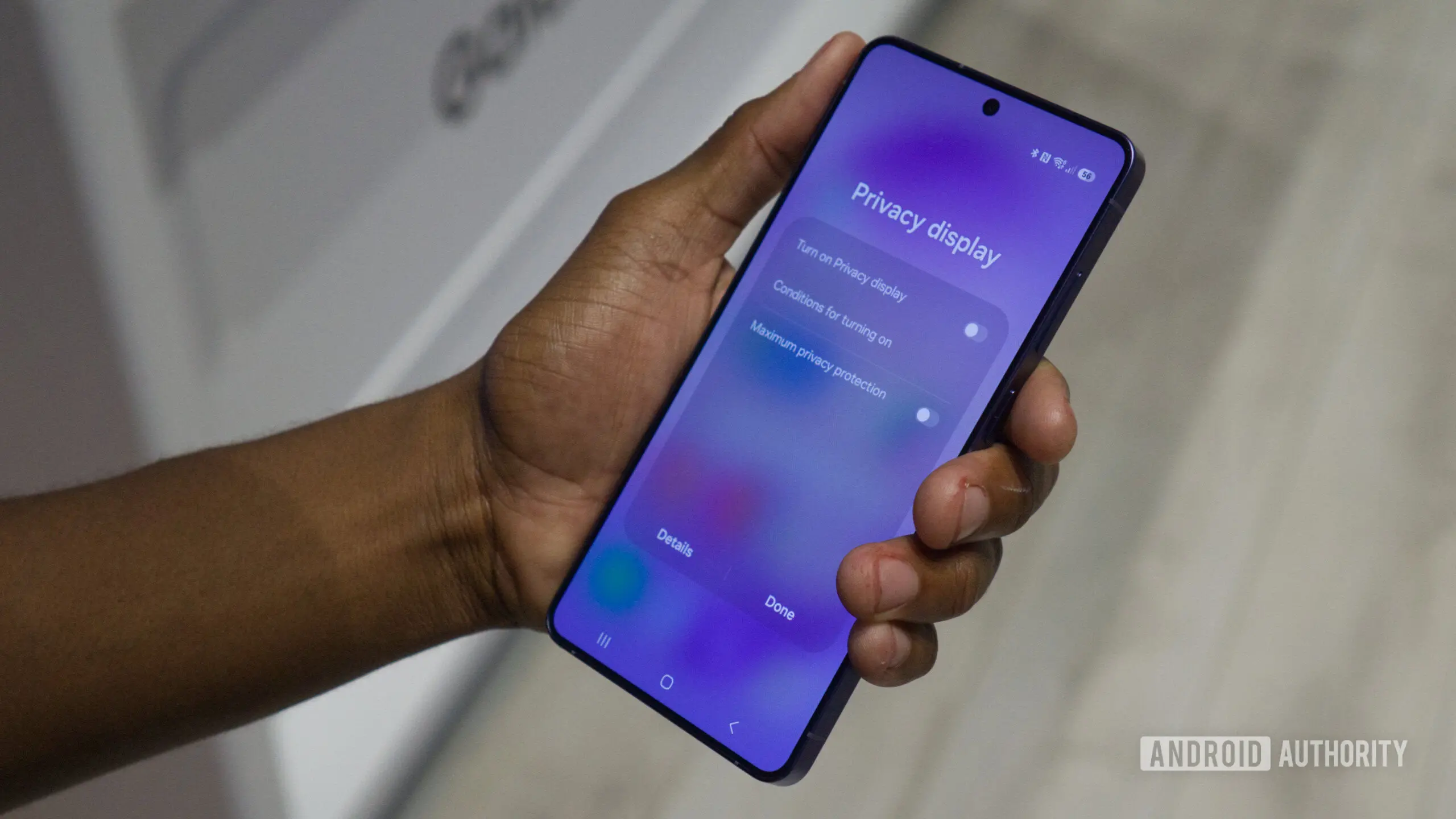
The Samsung Galaxy S26 Ultra introduced a much-talked-about Privacy Display feature earlier this year. Designed to deter shoulder surfers, it uses specialized hardware to physically narrow the screen's viewing angle. Now, word has it that Samsung's biggest Android rival, Xiaomi, is working on a similar functionality. According to tipster Yogesh Brar, Xiaomi will debut a Privacy Display feature as part of its HyperOS 4 update later this year. This raises an interesting question: Will Xiaomi's alternative be better than Samsung's?
Hardware vs. software: The core difference
Samsung's Privacy Display relies on so-called Flex Magic Pixel technology built into the display panels of the S26 Ultra. These pixels can physically move, altering the direction of light emission and thus narrowing the viewing angle. Users can choose to constrain visibility for the entire screen or specific areas, such as when typing passwords or viewing sensitive documents. This hardware approach is elegant because it maintains full screen brightness and clarity for the intended user while blocking side glances.
However, according to Brar, Xiaomi's feature will arrive as part of HyperOS 4 rather than being tied to specific hardware. This strongly suggests it is a software-based solution. Software-based privacy screens typically work by dimming portions of the display, adding overlays, or using polarizing filters that reduce brightness from off-angles. While effective, they often come with compromises: the screen may appear dimmer overall, or the viewing angle restriction might be less precise.
It's worth noting that hardware privacy features could be enabled through software if the phone's display already supports the necessary pixel control. But given that no current Xiaomi phone is known to have Flex Magic Pixel or similar hardware, the most likely scenario is a pure software implementation.
The BlackBerry precedent
If Xiaomi goes the software route, it might follow a path already trodden by BlackBerry. When BlackBerry released Android phones like the Priv and KeyOne, it included a "Privacy Shade" feature. This option effectively blacked out the entire screen except for a small, draggable rectangular area through which the user could view content. While it prevented shoulder surfing, it was far from seamless and required constant manual adjustment.
Xiaomi could improve upon this with more intelligent software that tracks the user's face or eyes, or integrates with app permissions. But any software-based solution will inherently lack the physical pixel control that makes Samsung's implementation so effective.
Brightness and eye strain: A potential advantage
One area where a software approach might actually outshine (pun intended) Samsung's hardware is brightness and eye health. The Galaxy S26 Ultra's Privacy Display has drawn criticism. Users have reported that the screen appears dimmer than the S25 Ultra's, and some have complained of eye strain. Colleague Zac Kew-Dennis, for example, noted that the S26 Ultra's reduced brightness and potential flickering from the pixel movement caused discomfort.
Xiaomi's software-based solution would not require any physical change to the pixels, so it wouldn't inherently dim the display or cause flicker. Instead, the privacy effect could be achieved by overlaying a pattern or adjusting the backlight in a way that minimally impacts the primary viewing experience. Furthermore, because it's software-defined, users could easily toggle it on and off, or adjust intensity, without worrying about hardware wear.
Compatibility with older phones
Another major advantage of a software-only approach is that Xiaomi could bring Privacy Display to a wide range of existing devices through the HyperOS 4 update. Owners of the Xiaomi 14 series, Redmi Note 13 series, or even older flagships could potentially enjoy the feature without buying a new phone. This democratizes privacy protection in a way that Samsung's hardware-exclusive feature cannot.
In contrast, Samsung's Privacy Display is limited to the Galaxy S26 Ultra (and likely future models with the requisite display technology). Users of older Samsung phones, or even the S26 series non-Ultra models, are out of luck unless they purchase a separate privacy screen protector.
How could Xiaomi implement it?
While no technical details have been revealed, there are several software techniques Xiaomi might use. One common method is to use a dynamic filter that reduces contrast and brightness for viewers at extreme angles while maintaining a clear image for the user directly in front. This can be achieved through algorithms that alter pixel brightness and color based on viewing angle, though without hardware control the effect is limited.
Another possibility is to employ a small, movable window similar to BlackBerry's Privacy Shade, but with smoother interaction – for example, a floating window that follows the user's gaze or is positioned automatically based on where they are typing. Xiaomi could also integrate with its existing privacy tools, such as the Second Space or App Lock features, to automatically enable Privacy Display when opening sensitive apps like banking or messaging.
A more advanced software approach might use the front camera to detect the user's face and only display content when the user is looking directly. If someone else glances at the screen, the content could be blurred or hidden. This would be completely software-driven and could be ported to many devices, though it would require camera permissions and consistent lighting.
Potential drawbacks of software privacy
Despite the advantages, software-based privacy screens have limitations. They are generally less effective at blocking side views because they can't physically redirect light. A determined shoulder surfer might still be able to read content from an extreme angle if the screen is bright enough. Additionally, software overlays often reduce overall brightness even for the intended user, which can be annoying in bright environments.
There's also the risk of battery drain. Constantly processing video frames to apply privacy filters consumes more power than hardware that mechanically restricts viewing angles. However, Samsung's hardware approach also uses power to move pixels, so the difference might be marginal.
Another concern is compatibility. Some apps might override system-level privacy overlays, revealing content unintentionally. Samsung's hardware approach is immune to this because the restriction happens at the pixel level, below the operating system.
Market implications
The smartphone industry has long sought effective privacy solutions. With shoulder surfing becoming a growing concern in public spaces like trains, cafes, and airports, any feature that offers better visual privacy is welcome. If Xiaomi delivers a solid software-based Privacy Display in HyperOS 4, it could pressure other Android OEMs – including Google, OnePlus, and Oppo – to follow suit.
It may also spur Samsung to refine its hardware approach, perhaps addressing the brightness and eye strain issues in future models. Competition between hardware and software solutions could ultimately lead to hybrid approaches that combine the best of both worlds.
For now, Xiaomi fans can look forward to the HyperOS 4 update, expected to roll out in late 2025. The update will likely bring many new features beyond Privacy Display, including improved performance, new AI capabilities, and enhanced customization. But Privacy Display could be the standout feature if done right.
Ultimately, whether Xiaomi's Privacy Display is "better" than Samsung's depends on what users prioritize. If you want the most effective protection and don't mind splurging on a flagship, Samsung's hardware approach is unmatched. But if you value wide compatibility, eye comfort, and software flexibility, Xiaomi's upcoming implementation could be the better choice.
Only time will tell how well Xiaomi executes this feature. But one thing is certain: the battle for your screen's privacy is heating up, and consumers stand to benefit from the innovation.
Source: Android Authority News