

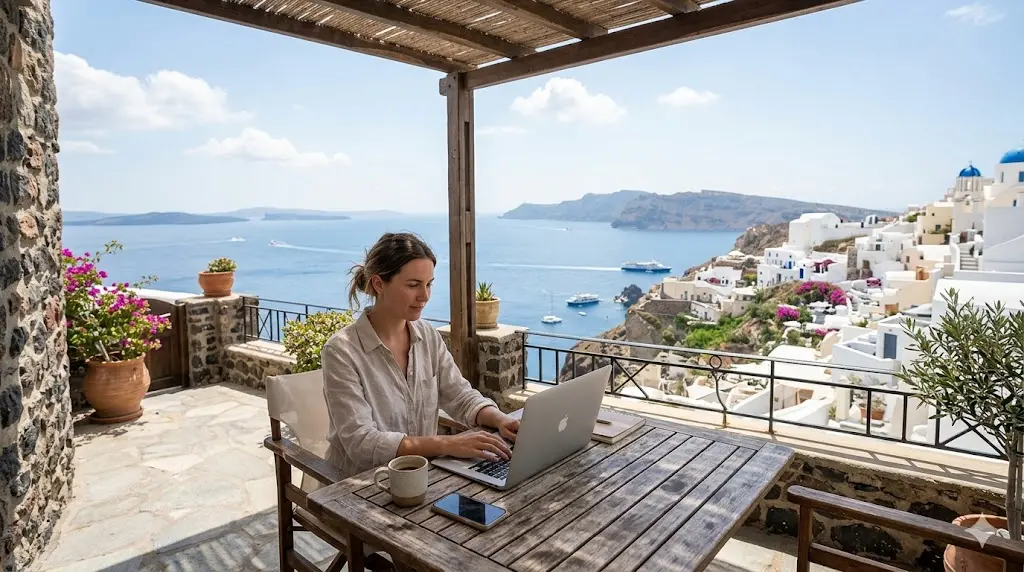
Remote work has changed more than office culture. It’s reshaping how people travel, where they stay, and how tourism businesses market experiences worldwide. From digital nomads staying months instead of days to hotels redesigning rooms into workspaces, the tourism industry is adapting faster than most analysts expected.
Remote work is transforming global tourism because travelers now mix business, lifestyle, and leisure into one experience. Longer stays, work-friendly destinations, flexible travel schedules, and digital-first tourism marketing are driving major shifts in hotels, airlines, coworking spaces, and local economies.
What Is Remote Work Tourism and Why Does It Matter?
Remote Work Tourism — a travel trend where people work online while temporarily living in another city or country instead of taking short traditional vacations.
Here’s the thing. Tourism used to depend heavily on weekends, holidays, and seasonal breaks. That model still exists, but remote work opened a completely different market. Millions of people can now work from beach towns, mountain cities, or affordable international hubs while keeping full-time jobs.
You’ve probably noticed it already. Cafes are filled with laptops. Hotels advertise high-speed Wi-Fi before pool access. Airlines now promote flexible tickets instead of rigid travel dates.
What most people overlook is that remote workers don’t behave like traditional tourists. They spend more time locally. They shop differently. They often rent apartments, use coworking spaces, and contribute to local economies for weeks or even months.
That’s a huge shift.
Why Remote Work Is Reshaping the Global Tourism Industry in 2026
By 2026, remote work will probably influence tourism more than seasonal vacation patterns in many regions. At least from what I’ve seen, tourism boards are no longer just selling attractions. They’re selling lifestyle flexibility.
A traveler who stays for three months creates more stable local revenue than someone visiting for three days. That changes how destinations compete globally.
Countries across Asia, Europe, and Latin America have already introduced remote work visa programs because they see long-term economic value. Smaller cities are also benefiting. Travelers who once crowded major capitals are now choosing quieter, affordable locations with reliable internet.
Here’s a surprising part though. Climate concerns and rising urban stress are also pushing remote workers toward slower travel habits. Many now prefer one long stay over five short vacations.
That single behavioral change affects:
Hotel revenue models
Airline scheduling
Local tourism campaigns
Apartment rentals
Restaurant marketing
Transportation systems
In my experience, tourism brands that adapt early usually dominate visibility online because they speak directly to modern traveler behavior instead of promoting outdated vacation packages.
Expert Tip
Tourism businesses should stop marketing only “vacations” and start marketing “temporary lifestyles.” Remote workers care about internet reliability, workspace comfort, local community, and affordability just as much as tourist attractions.
How Remote Work Is Changing Travel Behavior
Travel behavior today looks very different from five years ago.
People don’t always separate work and travel anymore. A marketing consultant might spend a month in Bali while working remotely. A software engineer could stay in Lisbon for an entire quarter while attending virtual meetings.
This creates a new type of traveler.
They often:
Stay longer than average tourists
Spend steadily rather than heavily
Travel during off-seasons
Prefer apartments over hotels
Search for coworking-friendly destinations
Oddly enough, many tourism businesses were slow to notice this shift. Some still focus entirely on luxury holiday campaigns even though remote workers are becoming one of the most valuable customer groups worldwide.
Real-World Example
Imagine a small coastal town that previously depended on summer tourism. After remote work trends expanded, local businesses started offering monthly apartment packages, coworking memberships, and long-stay discounts.
Within a year, restaurants stayed profitable beyond peak season because remote workers continued living there during quieter months.
That’s not a tiny operational adjustment. That’s a full tourism model rewrite.
How Tourism Businesses Can Adapt Step by Step
1. Create Work-Friendly Travel Packages
Hotels and resorts need more than comfortable beds now. Travelers expect proper desks, strong Wi-Fi, meeting rooms, and quiet workspaces.
Some hotels are even converting conference rooms into coworking lounges. Honestly, that move makes more sense than expensive banquet renovations in many markets.
2. Focus on Long-Stay Marketing
Traditional tourism campaigns push short visits. Remote work tourism rewards extended stays.
Businesses should promote:
Monthly pricing
Flexible booking
Local experience bundles
Workspace access
Community events
Longer stays often produce better customer loyalty and more predictable income.
3. Optimize Digital Advertising for Remote Workers
Performance marketing campaigns now target phrases linked to remote work lifestyles rather than only vacation intent.
Search behavior has changed dramatically:
“Best cities for remote work”
“Work-friendly hotels”
“Digital nomad apartments”
“Long stay travel destinations”
Tourism brands that ignore these search trends lose visibility quickly.
4. Build Community Experiences
Remote workers often feel isolated. Destinations that organize networking events, cultural meetups, or local workshops tend to retain visitors longer.
That emotional connection matters more than people think.
5. Use Data Analytics to Track Behavior
Modern tourism marketing depends heavily on analytics. Businesses track:
Average stay duration
Booking patterns
Seasonal movement
Device usage
Local spending behavior
What most guides miss is this: tourism companies now operate partly like tech companies because digital behavior influences travel decisions so heavily.
Common Mistake: Assuming Remote Workers Spend Less
A lot of tourism businesses still believe remote workers are “budget travelers” who contribute less economically.
That’s not always true.
Yes, many avoid luxury resorts. But they often spend consistently across local businesses over long periods. Cafes, gyms, transportation services, restaurants, coworking hubs, and neighborhood stores all benefit from extended stays.
One short-term tourist might spend aggressively for three days. A remote worker could support local businesses steadily for three months.
Big difference.
How Digital Marketing Is Evolving With Remote Tourism
Tourism advertising used to rely heavily on emotional vacation imagery. Beaches. Pools. Sunset cocktails. You know the formula.
Now the messaging is more practical.
People want:
Stable internet
Affordable living
Safety
Healthcare access
Flexible housing
Community connections
Performance marketing campaigns increasingly focus on these lifestyle factors because remote workers search differently from traditional tourists.
I’ve seen campaigns with simple workspace photos outperform luxury travel ads because they address actual traveler priorities instead of fantasy-driven marketing.
That feels counterintuitive at first, but the data usually supports it.
Expert Tip
Tourism marketers should create separate campaigns for short-term vacation travelers and remote workers. Combining both audiences often weakens conversion rates because their motivations are completely different.
Why Smaller Destinations Are Winning
One of the most interesting developments is the rise of secondary destinations.
Large tourism capitals remain popular, obviously. But remote workers increasingly choose smaller cities with:
Lower living costs
Less crowding
Better work-life balance
Cleaner environments
Slower pace of life
That trend is redistributing tourism revenue globally.
A town that never appeared in international tourism campaigns five years ago can suddenly become attractive because it offers affordable apartments and fast internet.
Pretty wild when you think about it.
The Role of Technology in Remote Tourism Growth
Technology is basically the engine behind this transformation.
Without:
Video conferencing
Cloud collaboration
Digital payments
Remote project management
Global connectivity
…this tourism shift wouldn’t exist at scale.
Travel platforms are also evolving rapidly. Booking sites increasingly filter accommodations by workspace quality, internet speed, and remote-work suitability.
Some tourism boards even partner with coworking networks now. That would’ve sounded strange a decade ago.
Will Traditional Tourism Disappear?
Not at all.
Family vacations, luxury tourism, adventure travel, and short-term leisure trips will continue growing. Remote work tourism simply adds another layer to the industry.
In fact, hybrid tourism models are becoming more common. Someone might work remotely for two weeks and then extend the trip into a family holiday.
That blend creates new opportunities for:
Airlines
Hospitality brands
Local tourism boards
Rental platforms
Event organizers
The industry isn’t shrinking. It’s diversifying.
Expert Tips and What Actually Works
Here’s my hot take. Tourism businesses obsess too much over visual branding and not enough over practical usability.
A stunning destination won’t attract remote workers if internet reliability is terrible or booking flexibility is limited.
What actually works:
Transparent pricing
Fast customer support
Reliable infrastructure
Flexible cancellations
Community-focused experiences
Local authenticity
I’ve also noticed that destinations trying too hard to become “digital nomad capitals” sometimes lose their local charm. Ironically, authenticity itself has become a tourism asset.
Expert Tip
Don’t market every destination as a productivity paradise. Some remote workers are actively searching for slower, less optimized experiences because constant productivity culture feels exhausting.
People Most Asked About Why Remote Work Is Reshaping the Global Tourism Industry
Why are remote workers important to tourism?
Remote workers often stay longer than traditional tourists and contribute steady spending to local economies. Their travel patterns also help destinations reduce seasonal revenue dependence.
Which destinations benefit most from remote work tourism?
Affordable cities with strong internet infrastructure, good safety standards, and comfortable living conditions usually benefit the most. Smaller cities are gaining popularity quickly.
How does remote work affect hotels?
Hotels now redesign spaces to include coworking areas, meeting rooms, and workspace-friendly accommodations. Flexible booking policies are also becoming more common.
Is remote work tourism good for local economies?
In many cases, yes. Long-term visitors support local restaurants, transportation services, rental markets, and small businesses consistently over extended periods.
What challenges come with remote work tourism?
Housing affordability, overcrowding, infrastructure strain, and cultural disruption can become problems if destinations grow too quickly without proper planning.
How are tourism marketers adapting?
Marketing campaigns now focus more on lifestyle flexibility, work-friendly amenities, internet quality, and long-stay experiences instead of only short vacation promotions.
Will remote work continue influencing tourism after 2026?
Most analysts believe it will. Even companies returning to office models often allow hybrid flexibility, which still supports longer and more flexible travel behavior.
If your business wants stronger brand visibility, high authority backlinks, and instant publishing opportunities, platforms offering online press release distribution combined with performance marketing agency support can help improve SEO ranking, media coverage, and organic traffic for startups, agencies, bloggers, and growing brands aiming to expand their digital reach globally.